Digital culture / New series
Failed promises
The computer future that refused to arrive — or returned years later in an unexpected form.
01 / The future announced
Ideas that appeared inevitable
The history of computing is not made only of successes. It is also filled with convincing demonstrations, optimistic advertising and machines that arrived just a little too soon.
The paperless society, the videophone, videotex, virtual reality and the fully automated home were all going to transform everyday life. Sometimes the idea disappeared. Sometimes only the first device failed. And sometimes the predicted future eventually arrived in a form its original promoters would barely recognise.
This series does not mock obsolete technology. Failure reveals what an invention still lacked: affordability, ease of use, infrastructure, good timing or simply a reason to use it every day.
02 / A recurring structure
From promise to legacy
Every part asks the same questions, allowing very different visions of the future to be compared.
The promise: what would manufacturers, inventors and the media give us? The technology: how was it meant to work? The reality: what did the user actually receive? Why it failed: was the problem price, timing, operation or infrastructure? Not entirely a failure: where did the idea reappear? What remained: which machines, advertisements, words and memories survived?
03 / Parts
The computer future we received — and the one we missed
The first eighteen parts are now online. The remaining subjects form a roadmap for this growing series.
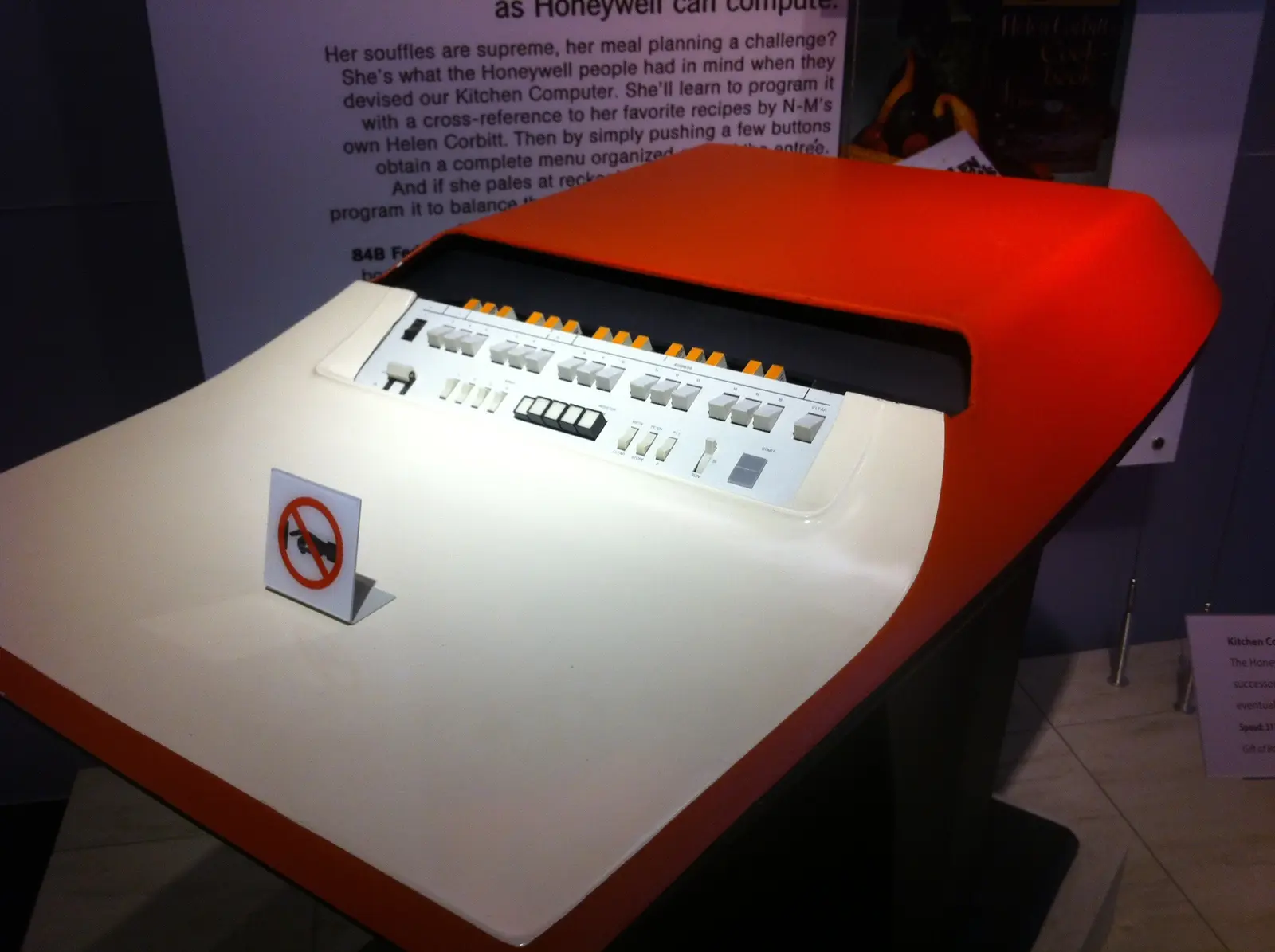
- Part 1The computer that was going to run the householdRecipes, family accounts and a smart home controlled from BASIC.
- Part 2The paperless societyThe digital office that made the printer irresistible instead.
- Part 3Videotex: the internet before the internetViditel, Prestel and Minitel promised an online world through the television.
- Part 4The videophone that kept failingWhy video calling won only after the videophone disappeared as a separate appliance.
- Part 5Interactive televisionVoting, shopping and playing through the screen — until streaming provided the better answer.
- Part 6The CD-ROM as the successor to the bookA library on one disc became the brief bridge from bookcase to web.
- Part 7The smart home of the 1980sX10 and the home computer promised convenience but made the resident a system administrator.
- Part 8The computer that listened to youSpeech recognition promised to replace the keyboard, but hearing was not the same as understanding.
- Part 9Handwriting recognition and the pen computerWriting on a screen felt natural, but in the end users mostly learned the machine’s language.
- Part 10Virtual reality: the future that arrived too earlyFrom Sensorama and Virtuality to Oculus, the future was announced again and again.
- Part 11The flying car: almost ready for a centuryThe prototypes genuinely drove and flew, but the complete transport system never got off the ground.
- Part 12The network computer without software of its ownA cheap workstation without local software anticipated the cloud, but the network was not ready.
- Part 13The electronic newspaperNews became digital, but the familiar paper came apart into websites, apps, stories and alerts.
- Part 14Education by computerA century of teaching machines, school computers and AI promised every learner a private tutor.
- Part 15The multimedia living-room computerCDTV, CD-i and 3DO tried to unite music, film, games and learning in one machine.
- Part 163D television in the living roomWhy glasses, scarce content and everyday viewing stopped the promised 3D revolution.
- Part 17The portable computer nobody wanted to carryThe computer would leave the desk, but a handle did not turn a heavy suitcase into a mobile workplace.
- Part 18Artificial intelligence in the 1980sExpert systems, LISP machines and Japan’s Fifth Generation project turned AI into a billion-dollar promise.
- Part 19Software agents that would arrange everything
- Part 20The universal connector
- Part 21The eternal storage medium
04 / More than a flop
Why failed technology remains interesting
A product can disappear while its central idea remains alive. That makes the road to our present digital world less direct — and far more human.
- DREAMA problem appears solved
The demonstration shows a future in which the awkward details have already vanished.
- PRODUCTThe user receives the machine
Price, cables, waiting and everyday maintenance suddenly become visible.
- FAILUREThe market turns away
The need is absent, the technology is early or a simpler alternative wins.
- RETURNThe idea finds a new form
Years later, better networks, software and controls make the same promise useful.