02 / Featured story
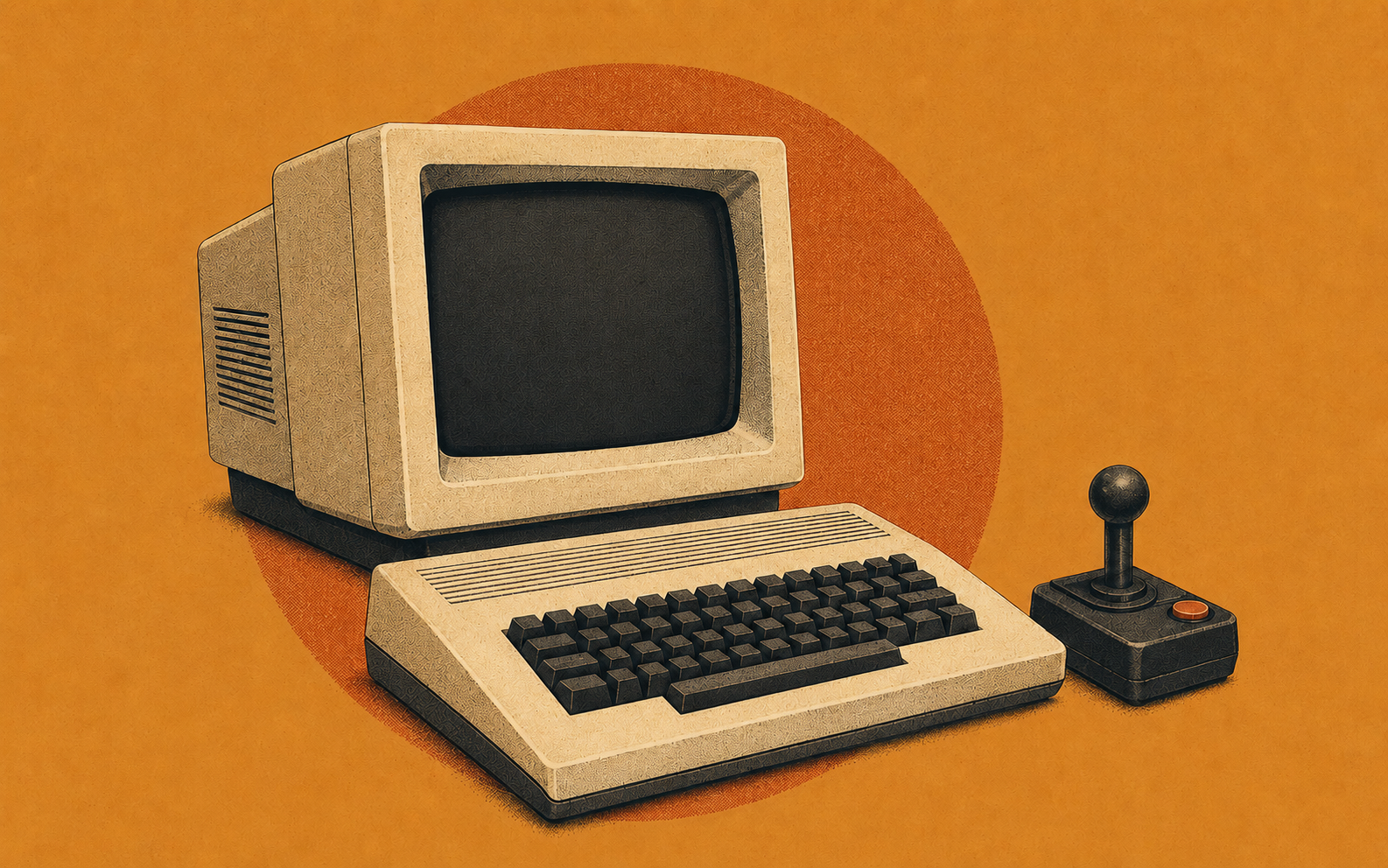
The year the computer came home
The Apple II, Commodore PET and TRS-80 were very different machines. Together, they showed that a complete personal computer could belong on a desk rather than behind a locked laboratory door.
From the 1970s to today
Explore the computers, consoles and games that shaped five decades of digital culture.
Explore the timeline01 / Timeline
Follow the story from early living-room experiments to the devices and services that connect players today.
The first home console
Magnavox OdysseyThe Trinity arrives
Apple II · PET · TRS-80The bedroom computer boom
Commodore 64Gaming goes portable
Nintendo Game BoyThe 3D generation
Sony PlayStationMotion in the living room
Nintendo WiiPlay without borders
Cloud · handheld · console02 / Featured story
The Apple II, Commodore PET and TRS-80 were very different machines. Together, they showed that a complete personal computer could belong on a desk rather than behind a locked laboratory door.
03 / The collection
Meet the Altair, Apple II, ZX Spectrum, Commodore 64, Amiga, Atari ST, IBM PC and the many machines that made computing personal.
Trace the living-room lineage from Odyssey and Atari to Nintendo, Sega, PlayStation, Xbox and today’s hybrid systems.
04 / Stories
Technology is also memory: the first program you typed, the game that kept you up late, and the sound of a cassette finally loading.
Company history
The VCS conquered the living room, but the 400, 800, XL and XE computers showed how much more Atari’s custom hardware could do.
Read story →Computer standard
Sony, Philips and many others built different computers that could run the same software.
Read story →Software history
From a blinking cursor and typed commands to windows, icons and the mouse.
Read story →Hidden histories
From ENIAC and Apollo to Atari and Sierra: the programmers and designers whose work changed the medium.
Read story →Industrial design
From the PET and Holborn to the NeXTcube and iMac: machines whose silhouettes became part of computing history.
Read story →Visual language
How scarce memory, restricted palettes and a handful of sprites shaped the distinctive look of early games.
Read story →Technology explained
Processor width mattered, but memory buses, graphics chips and clever design made the machine.
Read story →Culture & memory
A blinking cursor, the chatter of a disk drive and the people, places and rituals connected with old machines.
Read story →Online before the web
From the acoustic coupler and 300 baud to CBBS, sysops, downloads and FidoNet’s overnight message traffic.
Read story →Culture & memory
A growing series about the computer corner, the shared television, waiting, type-in programs and playing together.
View the series →Culture & memory
Demonstration machines, piles of brochures, software behind the counter and saving for an upgrade.
Read story →Futures that faltered
From the household computer to the paperless society: ideas that arrived too early, took another form or disappeared.
View the series →05 / About the project
“A living history of the machines that taught us to code, create and play.”
Silicon & Joysticks is an independent English-language archive of home computing and console culture, covering the 1970s to the present.
The site will grow with in-depth histories, personal memories, timelines and carefully credited photography.