Industrial design / Chapter 07
The most beautiful and unusual computer designs
From a metal workstation from the future to a computer that resembled a desk lamp. We remember these machines not only for what they could do, but for how they looked.
01 / More than a beige box
A computer can have a personality
Technical specifications age quickly. A strong silhouette remains recognisable for much longer.
Most computers of the 1980s and 1990s were not designed to be beautiful. They had to be affordable, practical and easy to manufacture. The result was often a rectangular case in beige, grey or brown, paired with a separate monitor about as elegant as a microwave oven.
Some manufacturers and designers chose a different path. Their machines stood out through colour, material or shape. Sometimes that produced a timeless design; sometimes it produced a strange device that was barely pleasant to use. Every so often, a computer managed to be beautiful, peculiar and forward-looking all at once.
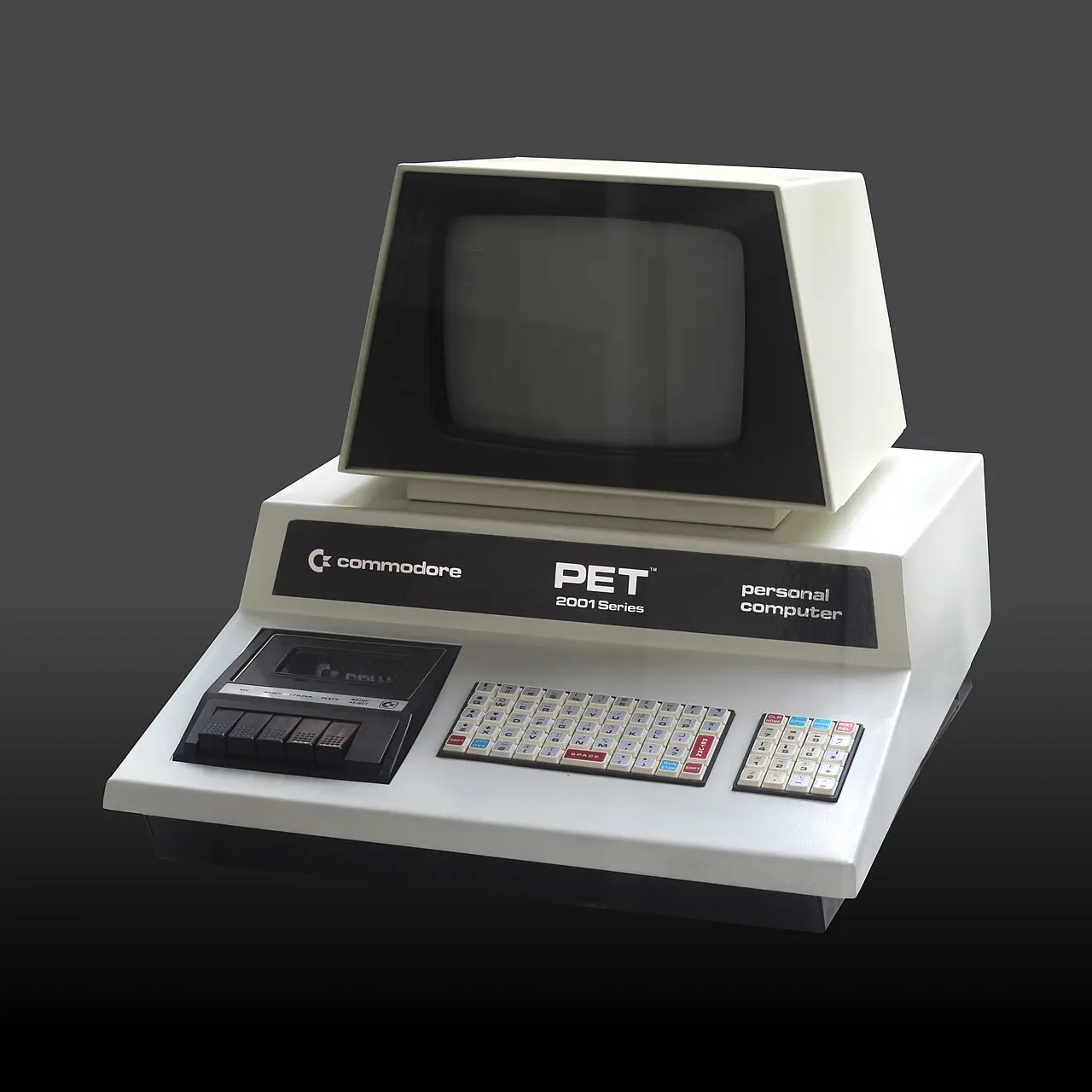
The Commodore PET of 1977 immediately showed what design could achieve. While many microcomputers still consisted of separate parts and cables, the PET combined display, computer, keyboard and cassette recorder in one metal workstation. Its tiny calculator keys were not comfortable, but the machine made it unmistakably clear that something new had arrived on the desk.
02 / As little computer as possible
Sinclair ZX81
Small, light, inexpensive—and almost impossible to confuse with anything else.
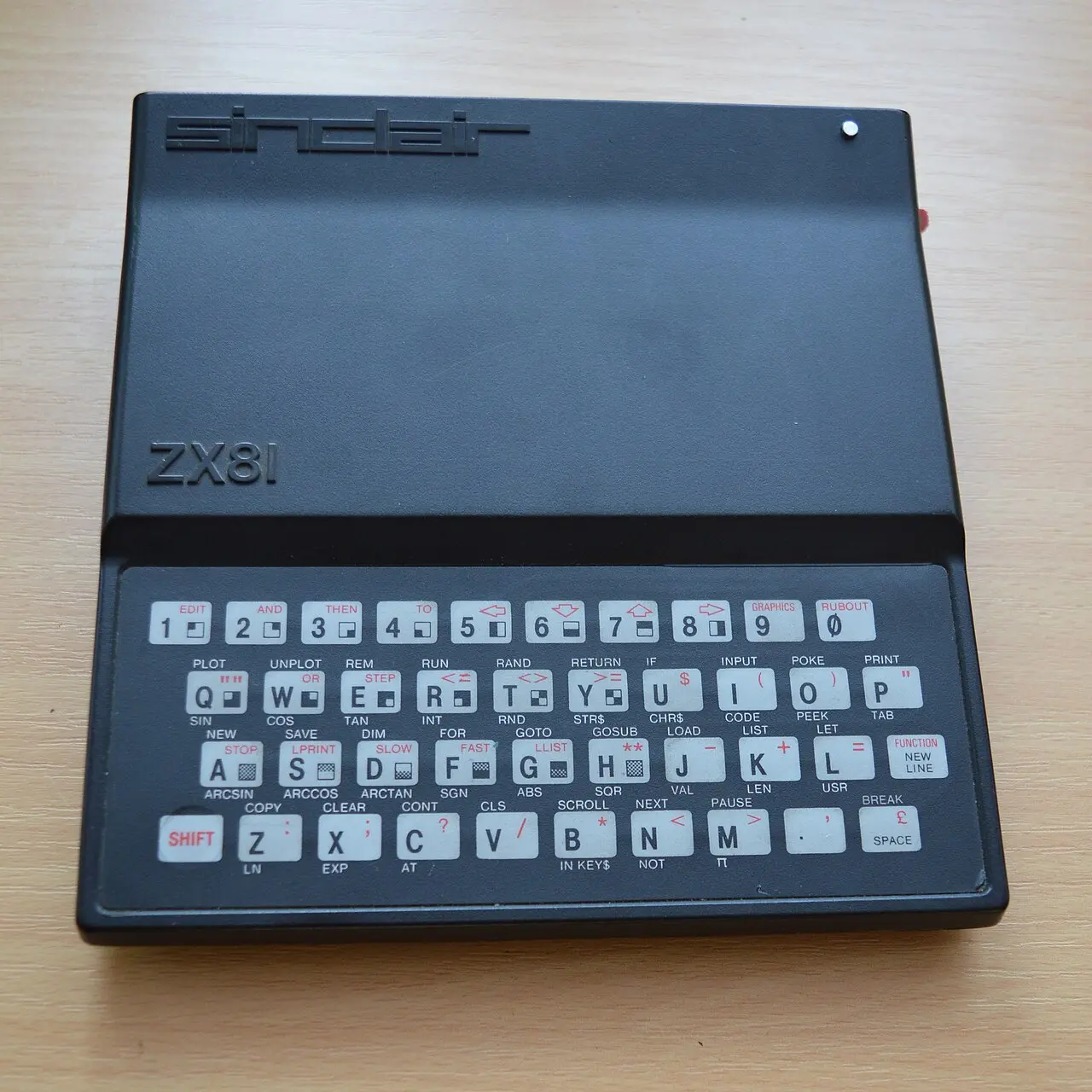
Designer Rick Dickinson gave the ZX81 a glossy black top, a white case and a keyboard without moving keys. Each key carried several BASIC commands. It looked technical and futuristic, although it did not always make entering a program easy for beginners.
The flat keys were primarily an economic solution. Dickinson nevertheless turned a limitation into an identity. The ZX81 did not resemble a shrunken office computer, but an entirely new kind of electronic object. With very few means, it gained a face that remains instantly recognisable.
03 / Born in Holland
Holborn: a Dutch computer creature
As if a science-fiction film had left a computer desk behind in Enschede.
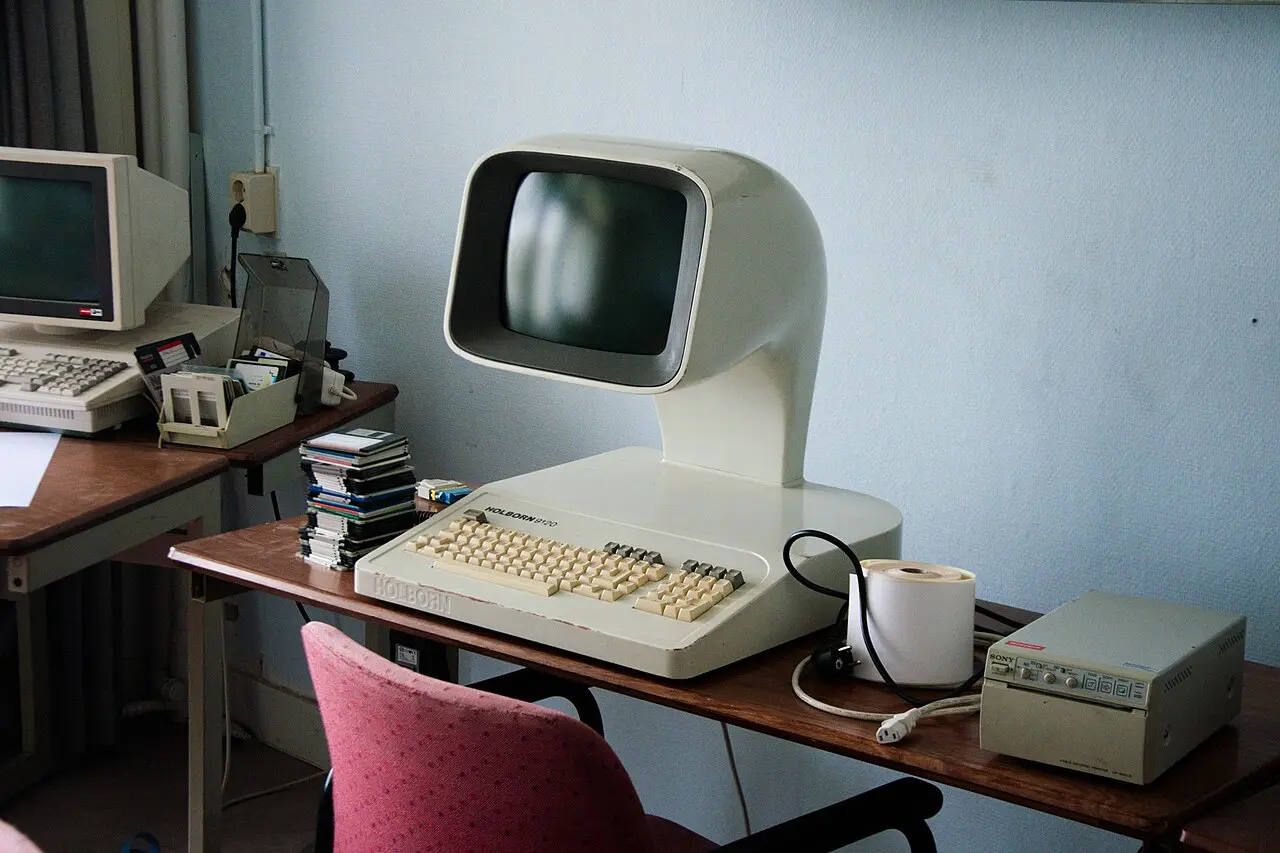
The Holborn 9100 was built in the early 1980s by a small company in Enschede. Its name referred to “born in Holland”. The round display rose like an eye or periscope from a flowing white shell that continued into the keyboard. The computer and its large floppy drives occupied a separate cabinet.
Industrial designer Henk Vos chose rounded, organic forms in an age of straight corners and visible seams. Some versions supported a light pen. A high price and the rapid rise of the IBM PC made life difficult for the manufacturer; only a few hundred Holborn systems were built. That rarity has turned the machine into a Dutch design object—beautiful and strange in equal measure.
04 / Portable, with strong arms
Osborne 1 and Commodore SX-64
The first portable computers were less like laptops and more like luggage.
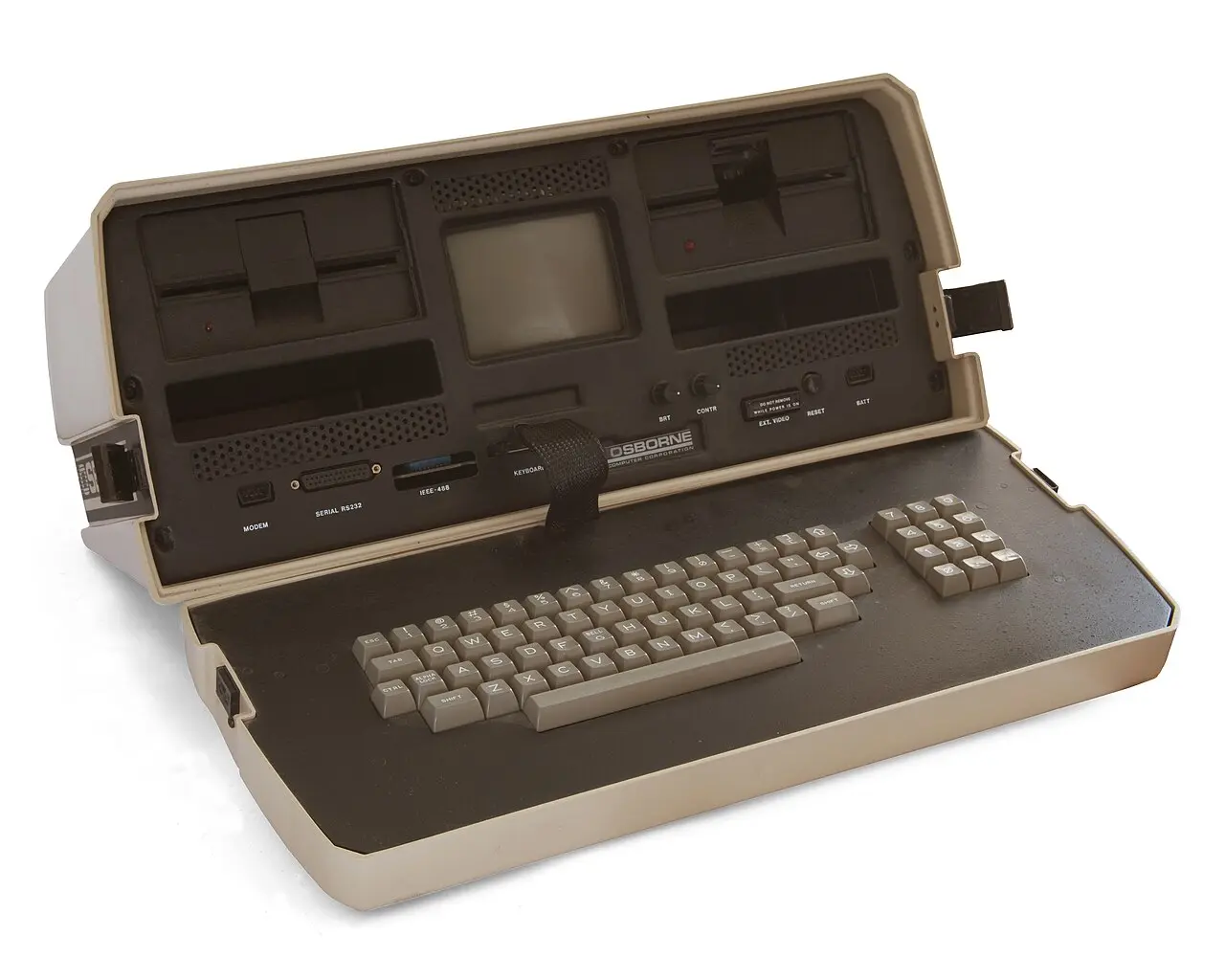
The Osborne 1 weighed more than ten kilograms and needed a wall socket. Its front contained two floppy drives with a five-inch display between them. It was not elegant; the machine was compared to a sewing machine and a military radio. Yet its design proved that a complete computer could travel.
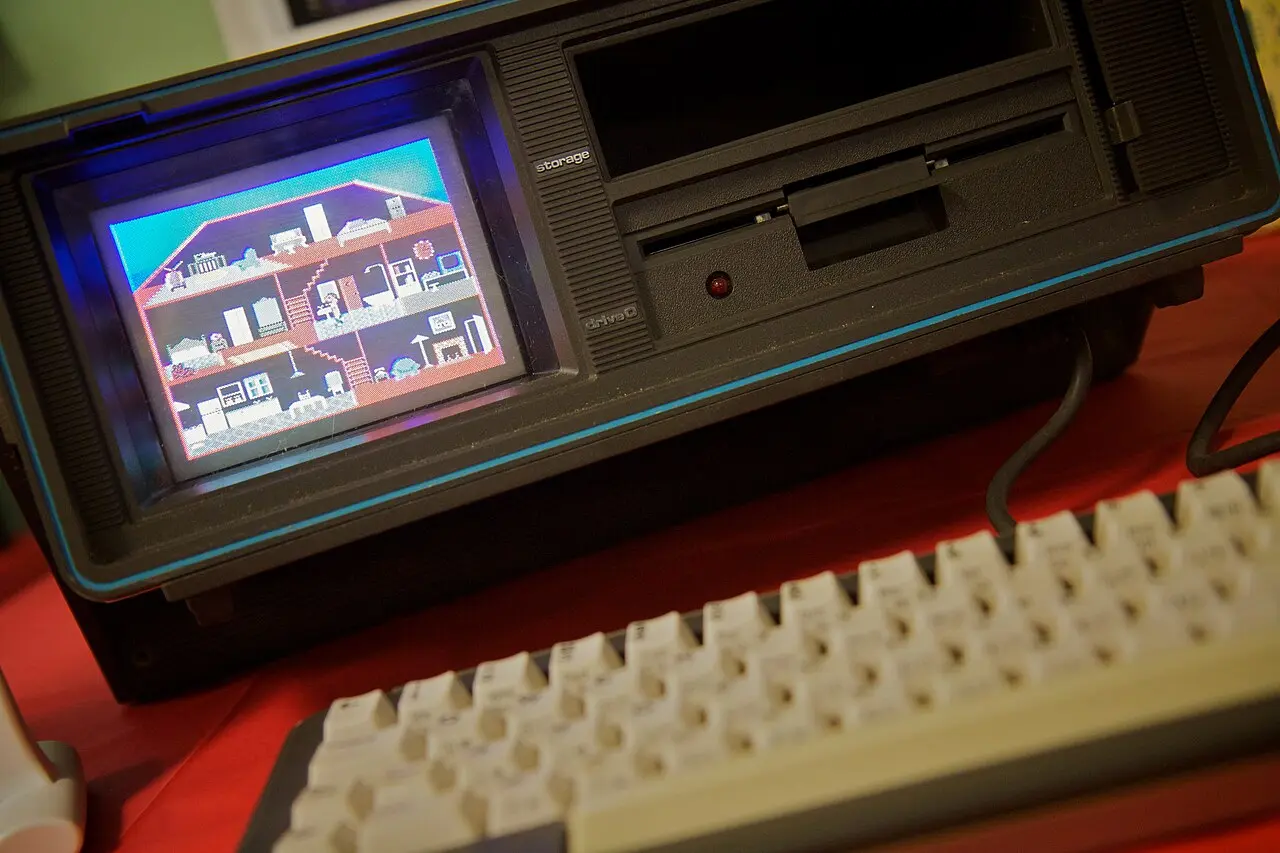
Commodore made the idea more attractive with the SX-64. Its dark case, coloured stripes and carrying handle looked like equipment for a technician on the way to repair a spacecraft. It too weighed about 10.5 kilograms. The SX-64 was expensive and its screen was small, but its styling has made it one of today’s most desirable Commodore computers.
05 / The laptop finds its shape
GRiD Compass
Open, work, close: Bill Moggridge fixed a gesture in place that we still make every day.
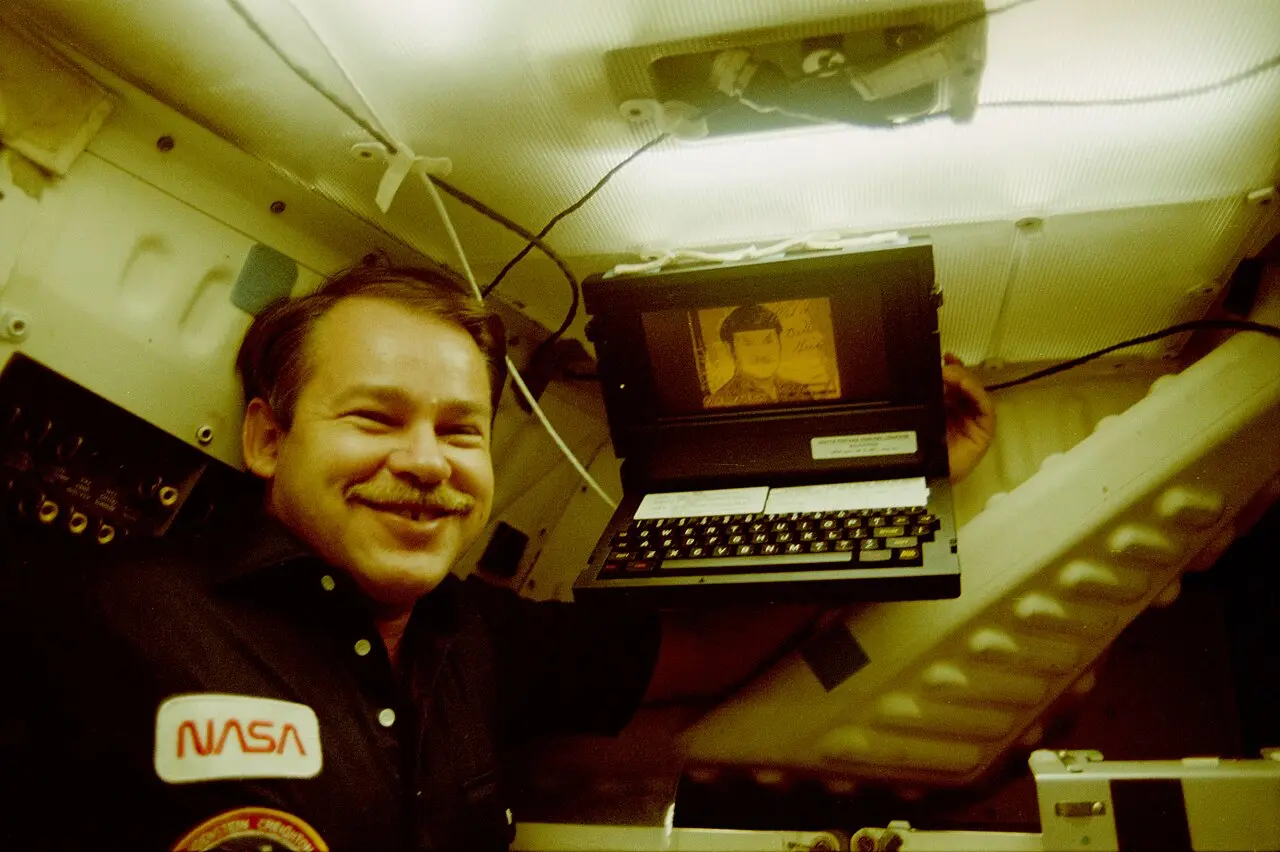
British industrial designer Bill Moggridge designed the GRiD Compass in 1981; it reached the market a year later. Its display folded over the keyboard. The clamshell now feels inevitable, but it was a novel solution that became the model for almost every laptop that followed.
The magnesium case was sober, black and costly. The Compass was intended mainly for professional, military and space-flight users. Its influence was far greater than its sales figures: nearly every modern laptop still repeats the same silhouette.
06 / A computer with a face
The original Macintosh
Friendlier, more upright and less technical than the personal computers around it.
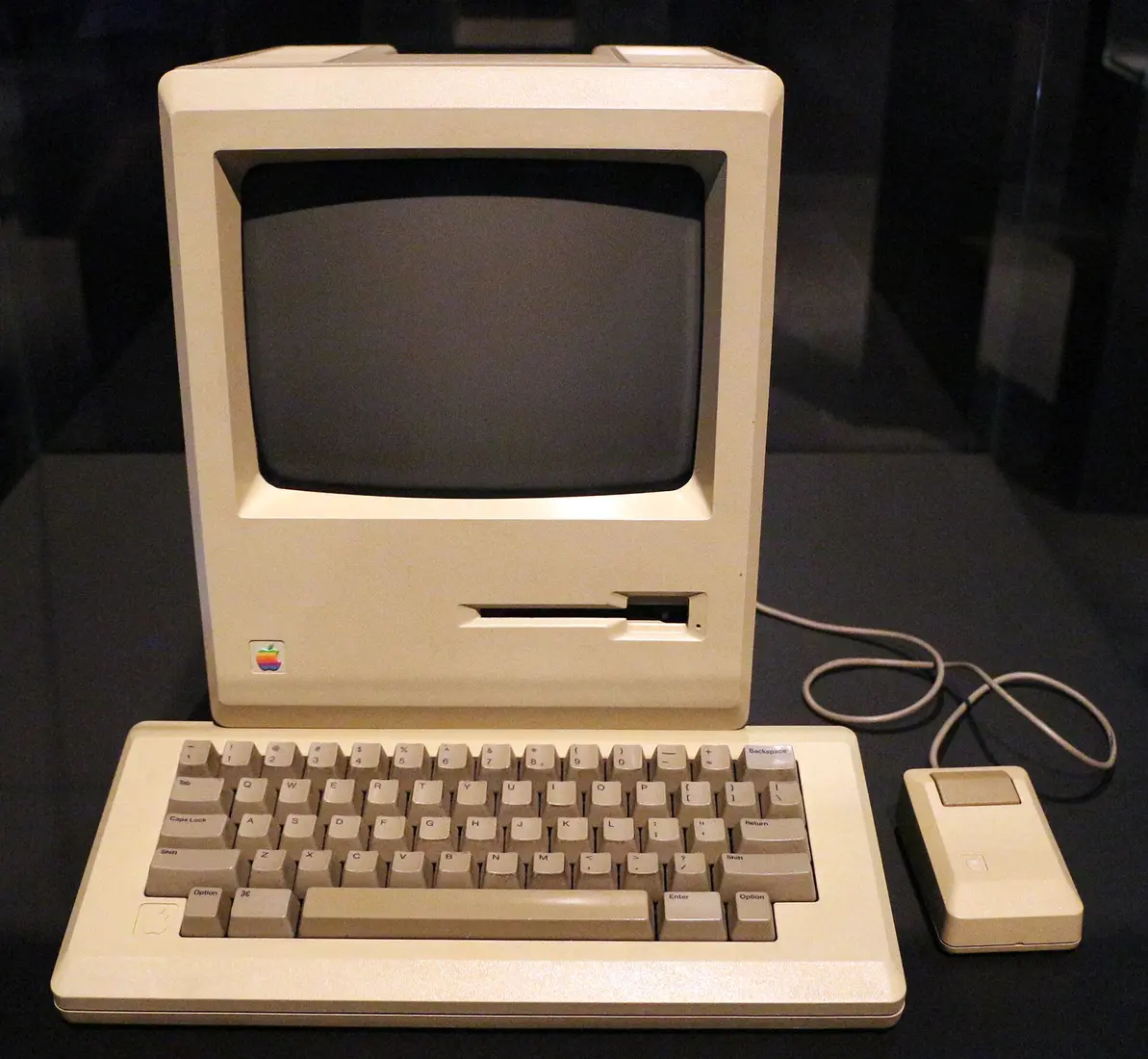
The Macintosh was not the first computer with a built-in display, but it felt different from its predecessors. The screen and floppy slot made the front look almost like a face. Rounded corners and an upright form made it more approachable than the angular machines of many competitors.
Its friendly appearance suited the graphical interface. Folders, documents and a wastebasket made software easier to understand; the mouse invited exploration. The case and the screen told the same story: this computer was not meant for programmers alone.
07 / The perfect black cube
NeXTcube
A severe workstation that looked as though it had already become a monument.
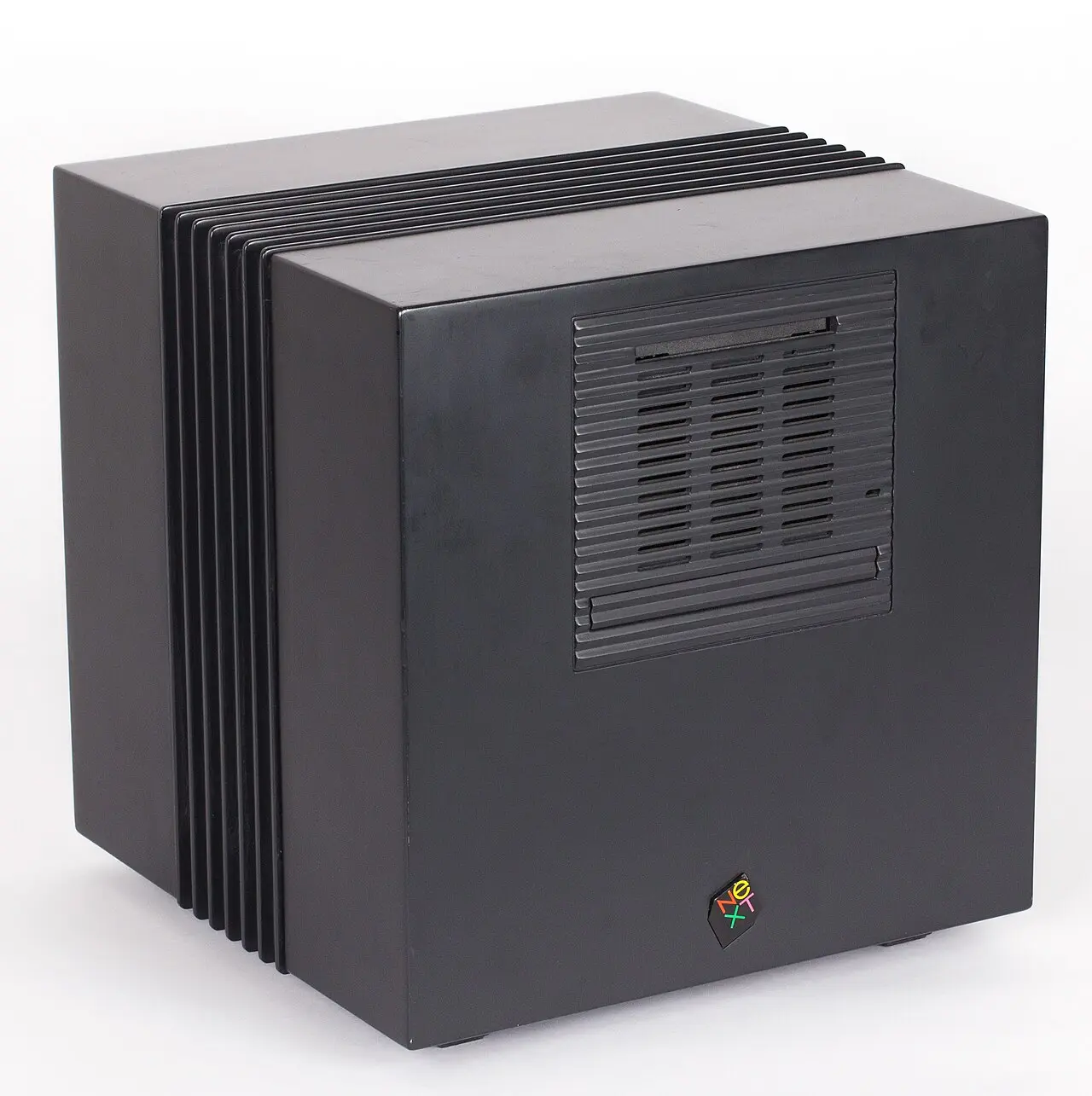
After leaving Apple, Steve Jobs founded NeXT. Hartmut Esslinger and frogdesign created a black magnesium case with sides of roughly thirty centimetres. Together with its black display, keyboard and mouse, the computer formed a severe, minimalist whole.
The NeXT Computer was never a mass product: it was expensive and aimed at universities, researchers and programmers. Its historical role was immense. At CERN, Tim Berners-Lee developed the first web server and browser on a NeXT computer. The Web therefore began on a machine designed to be taken seriously as an object.
08 / Liberation from beige
iMac G3
In 1998, a computer was suddenly allowed to stand in the middle of the room again.
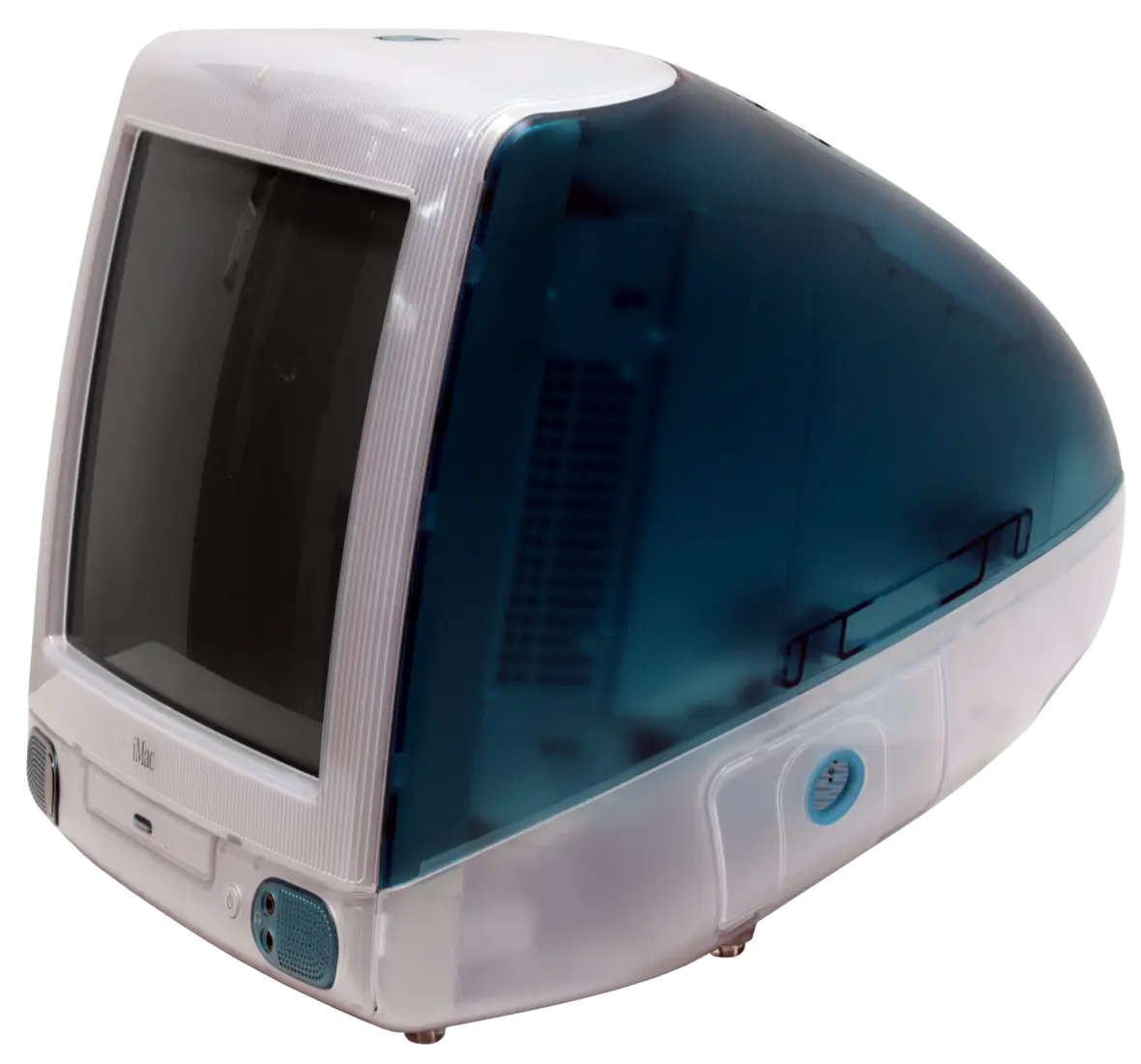
While the PC industry continued to produce beige boxes, the iMac arrived as a rounded, partly translucent all-in-one computer. Lime, grape, tangerine and strawberry versions followed. Technology became playful and was no longer expected to hide under a desk.
Not every choice worked. The round mouse was awkward and Apple omitted the familiar floppy drive. Even so, the iMac proved that people also chose a computer for its colour, form and presence. Translucent coloured plastic soon appeared on telephones, printers and game consoles everywhere.
09 / The computer as desk lamp
iMac G4
A white half-sphere, an articulated arm and a display that leaned towards you.
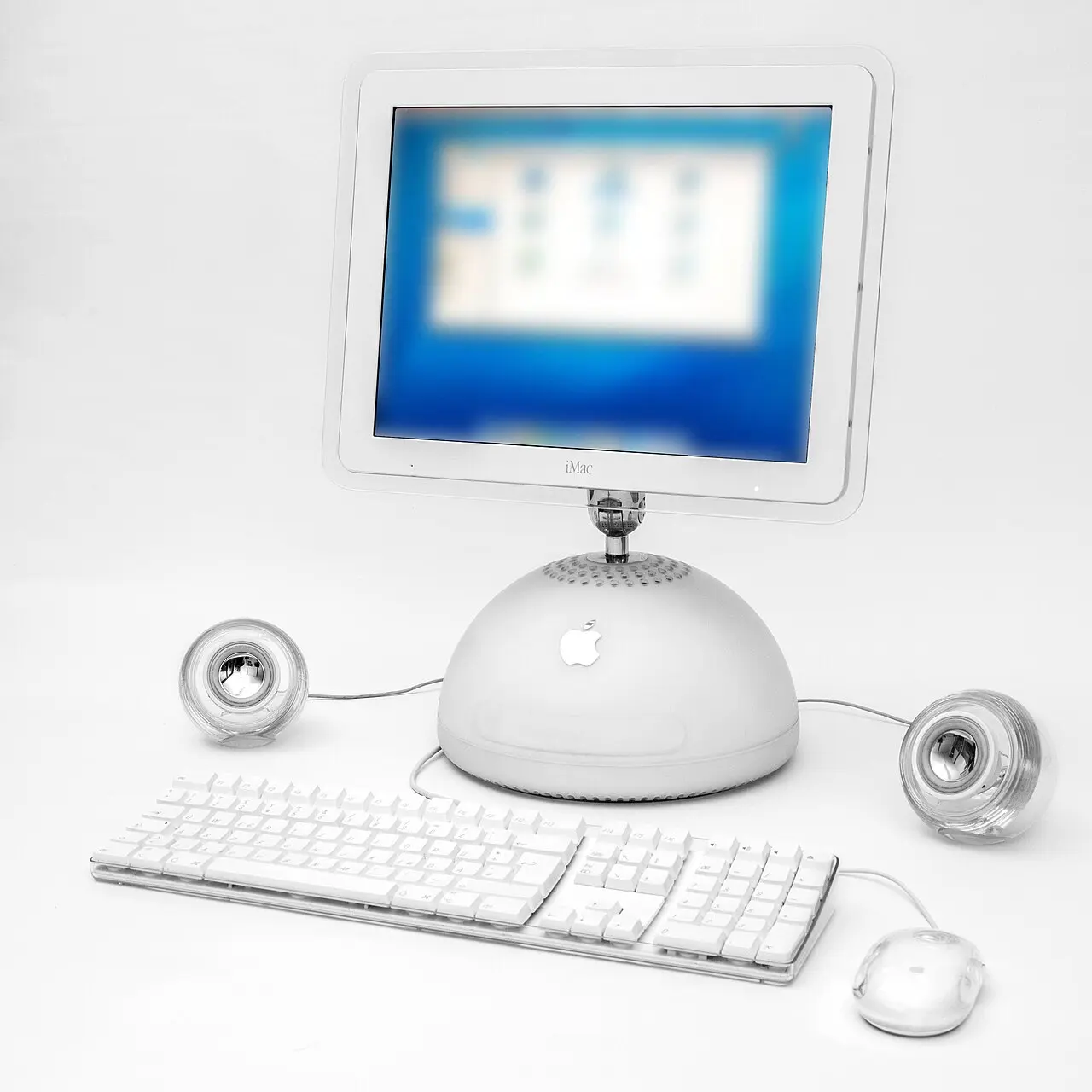
When Apple moved from a cathode-ray tube to an LCD, it did not simply place the display on a rectangular stand. The computer disappeared into a white half-sphere and the screen hung from a movable metal arm. The result resembled a desk lamp turning towards its user.
The construction was graceful but difficult to extend to larger, heavier displays. The lamp form disappeared after only a few years. Perhaps that is precisely why the design remains so distinctive: the iMac G4 was a computer that could exist only briefly.
10 / Half a century too early
Honeywell Kitchen Computer
A recipe computer without a conventional keyboard or display.
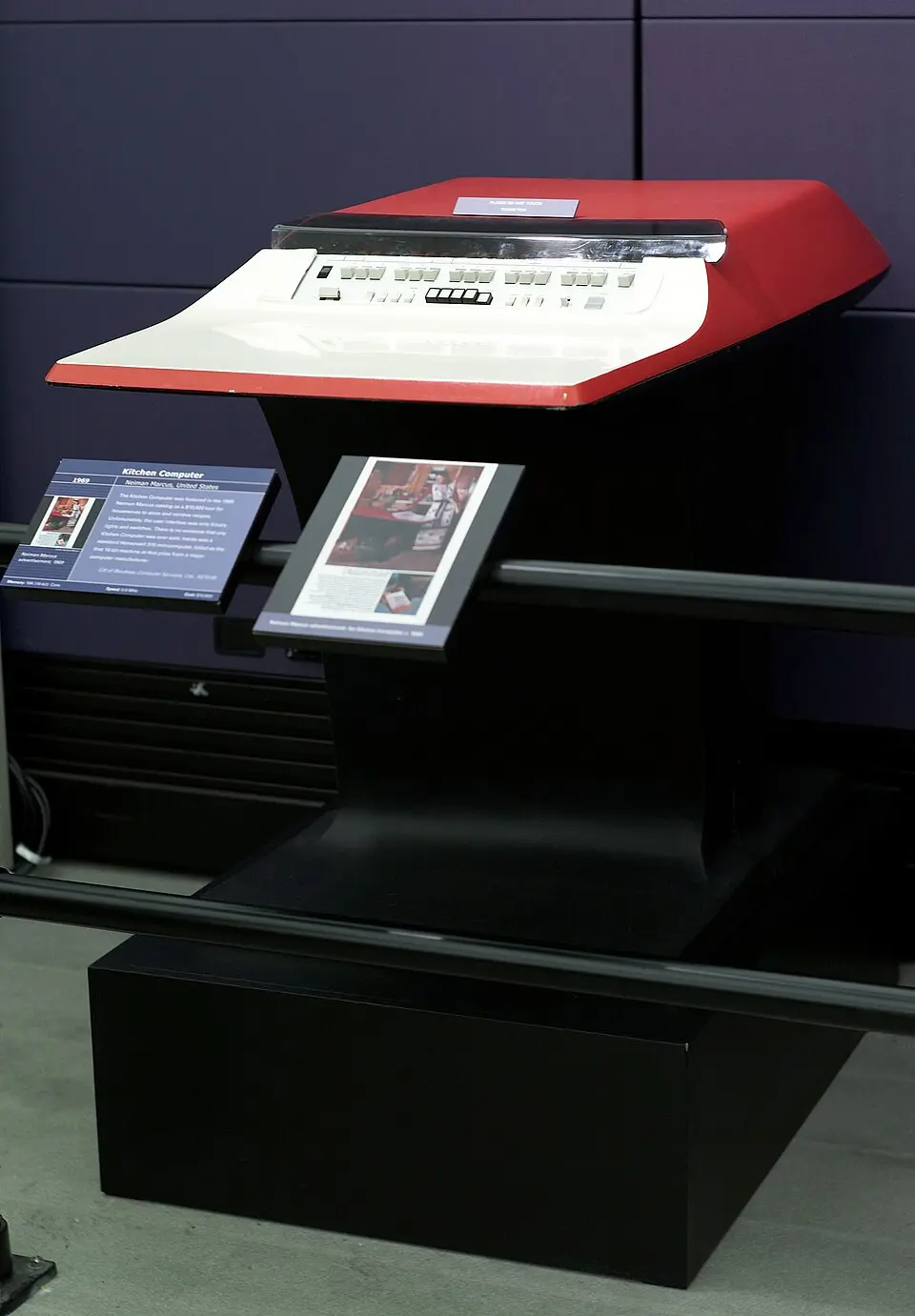
Department store Neiman Marcus offered the Honeywell Kitchen Computer as an extravagant Christmas gift. It weighed more than 45 kilograms and used switches and lights to enter and read recipes. A programming course was therefore included in the price.
Its striking pedestal and worktop made the computer resemble a futuristic piece of kitchen furniture. It was barely practical, yet the central idea was surprisingly accurate. Millions of people now place a tablet or phone by the cooker for recipes, shopping lists and cooking videos. The Honeywell was simply fifty years too early—and about a hundred times too heavy.
11 / A silhouette of its own
Beauty and strangeness are close relatives
You need only see the outline to recognise a PET, Holborn, Macintosh, NeXTcube or iMac G4. Their designers refused to accept the usual box and reconsidered what a computer might look like.
Some solutions became the norm: every laptop repeats the clamshell form of the GRiD Compass. Others remained one-offs, such as the round eye of the Holborn or the lamp-like iMac G4. Even the failures are valuable. They reveal what happens when a designer treats a computer not merely as a tool, but as furniture, companion or cultural object.
Specifications fade from memory. Form, colour and material remain. That may be why the strangest computer designs are often also the most beautiful—and certainly more interesting than yet another beige box.
12 / Sources & images
Explore further
- Computer History Museum — 1977 timeline and the Commodore PET
- HomeComputerMuseum — Holborn
- Science Museum Group — Osborne 1
- MoMA — GRiD Compass
- SFMOMA — NeXT Cube
- Apple — introduction of the 17-inch iMac G4
Image credits
- Commodore PET 2001 — Rama & Musée Bolo, CC BY-SA 2.0 FR
- Sinclair ZX81 — Wojciech Pędzich, CC BY-SA 4.0
- Holborn 9120 — Mitch Altman, CC BY-SA 2.0
- Osborne 1 — Bilby, CC BY 3.0
- Commodore SX-64 — Marcin Wichary, CC BY 2.0
- GRiD Compass aboard Discovery — NASA, public domain
- Macintosh 128K — Sailko, CC BY 3.0
- NeXTcube — All About Apple Museum, CC BY-SA 2.5 IT
- iMac G3 — David Fuchs / Rama, CC BY-SA 4.0
- iMac G4 — Felix Winkelnkemper, CC BY 2.0
- Honeywell Kitchen Computer — Joi Ito, CC BY 2.0


