Home computers / Chapter 04
MSX:
one standard, many brands
In a world of computers that could not understand one another, MSX made a revolutionary promise: software that worked across machines from different manufacturers. Philips gave that Japanese standard a distinctly European face.
01 / An incompatible world
Every computer was an island
Buying a home computer in the early 1980s meant choosing more than a machine. You also chose an entire world of software, peripherals and fellow users.
A Commodore 64 program did not run on a ZX Spectrum. An Atari disk could not simply be read by an Apple II. Even joysticks, printers and cassette recorders were not always interchangeable. Every system developed a strong identity, but the market became confusing. Choosing poorly could leave you with a machine that the local computer shop barely supported.
Kazuhiko Nishi, co-founder of Japanese publishing and computer company ASCII and an important Microsoft partner, saw an opportunity. ASCII and Microsoft developed a technical standard to which different manufacturers could build their home computers. MSX was announced on 16 June 1983. The comparison with VHS was irresistible: brands could design their own machines, provided the same software and accessories continued to work.
The precise meaning of the letters MSX has never been entirely settled. Explanations including Microsoft Extended and, later, Machines with Software eXchangeability have both been used. The promise mattered more than the name: owners would no longer have to remain loyal to one manufacturer to keep using their programs.
02 / The agreement underneath
The same foundation, a different appearance
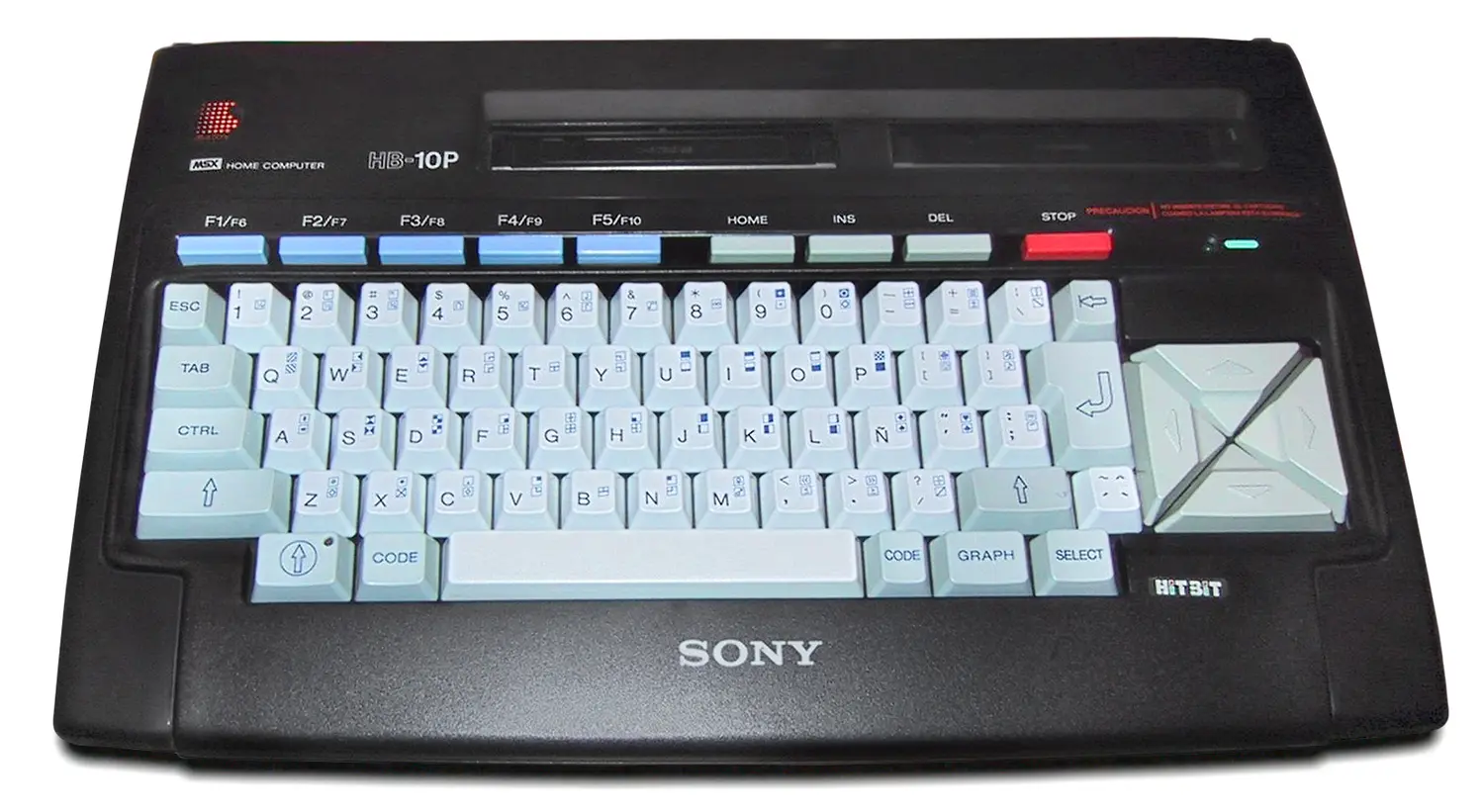
Sony, Panasonic, Canon, Toshiba, Yamaha, Mitsubishi, Sanyo and Philips could style their machines differently. Beneath the case, the family resemblance was clear.
A first-generation MSX normally used a Zilog Z80A processor running at roughly 3.58 MHz. A video chip from Texas Instruments' TMS9918 family produced a 256-by-192-pixel display, sixteen colours and up to 32 sprites. The General Instrument AY-3-8910 provided three sound channels plus noise. A common BIOS and Microsoft's MSX-BASIC lived in ROM.
Standardisation extended beyond a parts list. MSX defined how software addressed memory, the display, keyboard, cartridges and peripherals. A Konami cartridge could therefore be inserted into both a Sony and a Philips. BASIC programs behaved much the same way, while joystick ports followed a common layout.
Compatibility was not perfect. Machines differed in memory, keyboard layout, video output and additional features, while some programs used model-specific capabilities. Even so, MSX came closer to a true consumer standard than almost any other 8-bit home-computer family.
03 / Philips joins in
From the VG-8000 to the VG-8020
Philips already knew computers and game consoles. MSX offered something new: a place in an international platform without having to build the entire software market alone.
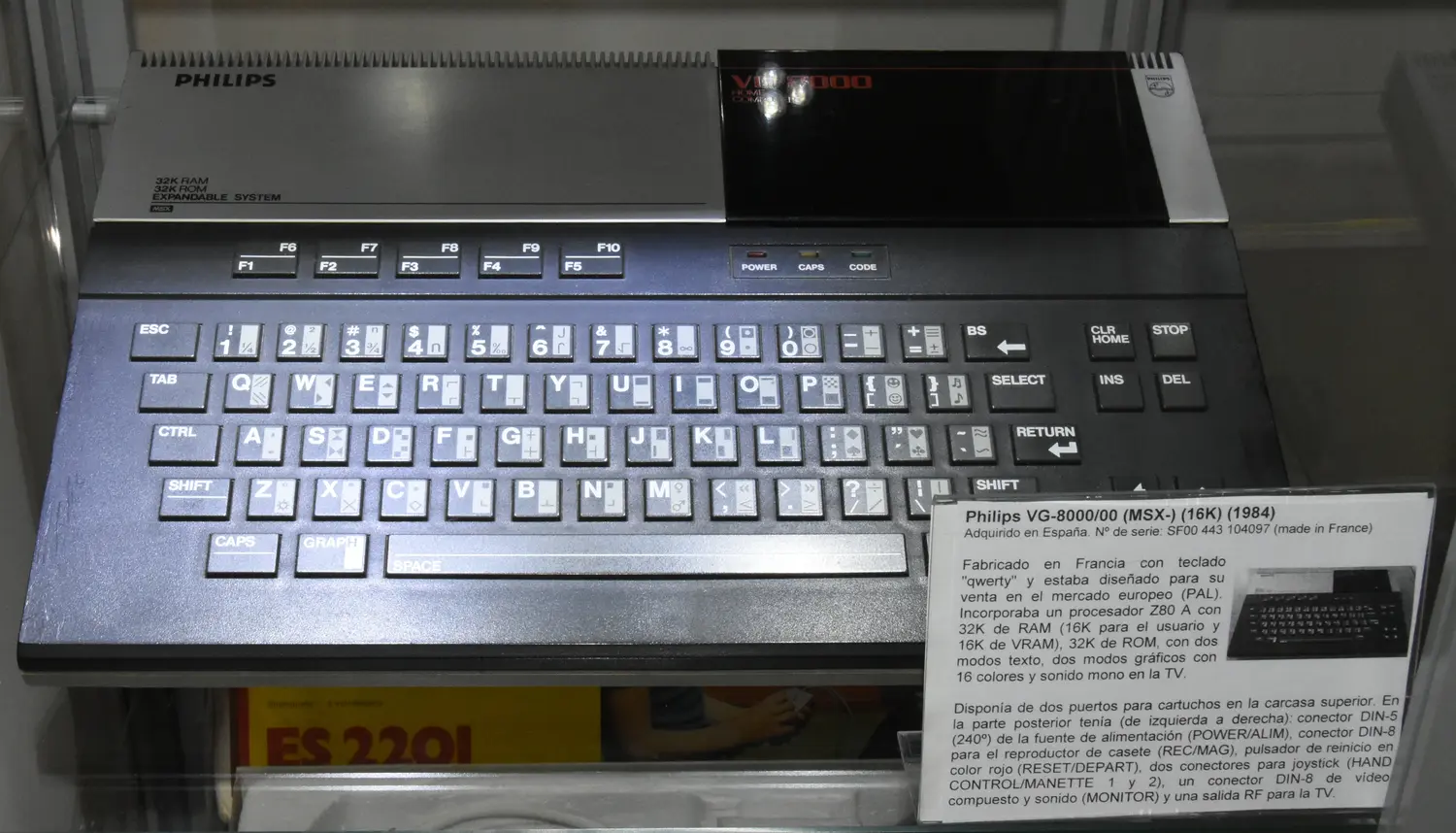
The 1984 VG-8000 came first. This low silver-grey machine used rubbery chiclet keys and provided 16 KB of RAM in its basic form. The closely related VG-8010 offered more memory but retained the compact keyboard. They were distinctive computers, though less than ideal for long typing sessions or demanding software.
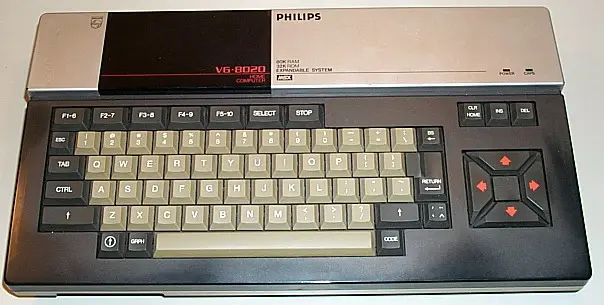
The VG-8020 was a far more convincing proposition. It contained 64 KB of RAM, 16 KB of video memory, two cartridge slots, two joystick ports and a full keyboard. Black and light-grey surfaces, red details and large cursor keys made it look both substantial and playful. For many users in the Netherlands, this became the definitive Philips MSX.
Philips supplied not only computers but monitors, data recorders, disk drives, printers, joysticks and expansion modules. That complete range mattered. The Philips name was already present in electronics shops, schools and living rooms, giving MSX greater visibility than it achieved in countries dependent on unfamiliar import brands.
04 / A Japanese games library
Konami, cartridges and worlds from another continent
For European players, MSX also opened a window onto Japan. Its software library therefore felt different from those of the Commodore 64 and ZX Spectrum.
Konami became the system's defining game developer. Titles including Nemesis, Knightmare, King's Valley, Penguin Adventure and The Maze of Galious gave MSX a powerful identity. The original version of Hideo Kojima's Metal Gear appeared on MSX2 in 1987 and established the foundations of a series still active decades later.
Cartridges cost more than cassettes, but started instantly and could contain additional electronics. Konami's SCC chip, for example, added five sound channels and gave later games an unusually rich voice. Familiar home-computer rituals continued alongside them: loading from tape, typing listings, drawing and making music, and eventually saving files to 3.5-inch disks.
The standard also supported smaller software markets. A publisher could produce one MSX edition for owners of Philips, Sony, Toshiba and other machines. European developers added local games, educational programs, word processors and hobbyist tools. MSX consequently became both a Japanese games machine and a European home computer.
05 / MSX in the Netherlands
Magazines, clubs and a community of its own
Dutch MSX culture became larger than sales figures alone suggest. A network grew around the computers in which owners exchanged knowledge and software.
Magazines such as MSX Computer Magazine and MSX Club Magazine published news, reviews, courses and long program listings. Readers learned not only which games were worth buying, but how memory banks, sprites and disk drives worked. The computer became less of a sealed consumer product and more of a device that could be understood step by step.
User groups, club days and computer fairs supplied the social infrastructure. Visitors traded advice and programs, demonstrated expansions and solved problems the manual never mentioned. Because different brands shared the same foundation, a Philips owner could sit beside someone with a Sony or Panasonic without having to explain an entirely different system.
The community remained particularly active in the Netherlands. Even after shops turned their attention to Amigas and PCs, disk magazines, home-built hardware and new software continued to appear. MSX was not merely a Philips product line; it had become a culture capable of carrying on without its manufacturer.
06 / MSX2 and New Media Systems
More colour, disks and serious ambitions
MSX2 retained the Z80 and compatibility with existing software, but its Yamaha V9938 video chip introduced higher resolutions, more colours and much more video memory. Philips used the 1985 standard for an extensive new range.
-
VG-8235
An all-in-one MSX2 with a built-in 3.5-inch drive, 128 KB of RAM and an unusual tilting keyboard.
-
NMS 8245
Under the New Media Systems name, Philips' compact range received a more businesslike appearance and an integrated drive.
-
NMS 8250 and 8255
Desktop models with separate keyboards; the 8255 offered two disk drives and looked at home on a serious workstation.
-
NMS 8280
The flagship could digitise external video and overlay computer graphics—an early form of affordable multimedia.
MSX did not become the world standard its creators imagined. It barely gained a foothold in the United States, while Commodore and Sinclair were already entrenched across much of Western Europe. It nevertheless attracted dedicated audiences in Japan, the Netherlands, Spain, Brazil and several other markets.
MSX2+ and the faster MSX turboR followed, but remained almost entirely Japanese. Philips stopped introducing new MSX computers near the end of the 1980s. The standard outlived its manufacturers: emulators, FPGA systems, new cartridges and active user groups keep the machines alive.
MSX is ultimately the story of an idea ahead of its time. We now take it for granted that software is not tied to one computer brand. In 1983, a shop shelf full of different machines able to run the same cartridge amounted to a small revolution.
07 / Sources & further reading


