Home computers / Chapter 03
Atari:
from arcade to home office
Atari became famous through Pong and the VCS, then built one of the most technically interesting home-computer families of its era. The 400, 800, XL and XE brought arcade-like graphics, distinctive sound and serious programming potential into the home.
01 / First came Pong
A new kind of entertainment
When Nolan Bushnell and Ted Dabney founded Atari in 1972, the video-game market barely existed. Pong turned a technical experiment into a public attraction.
The simple tennis game became a sensation in bars and arcades. Atari quickly learned how to combine a screen, controls and electronics into an experience that required no explanation. Home Pong carried that experience into the living room in 1975. Department-store chain Sears placed a major order and sold the machine under its Tele-Games brand.
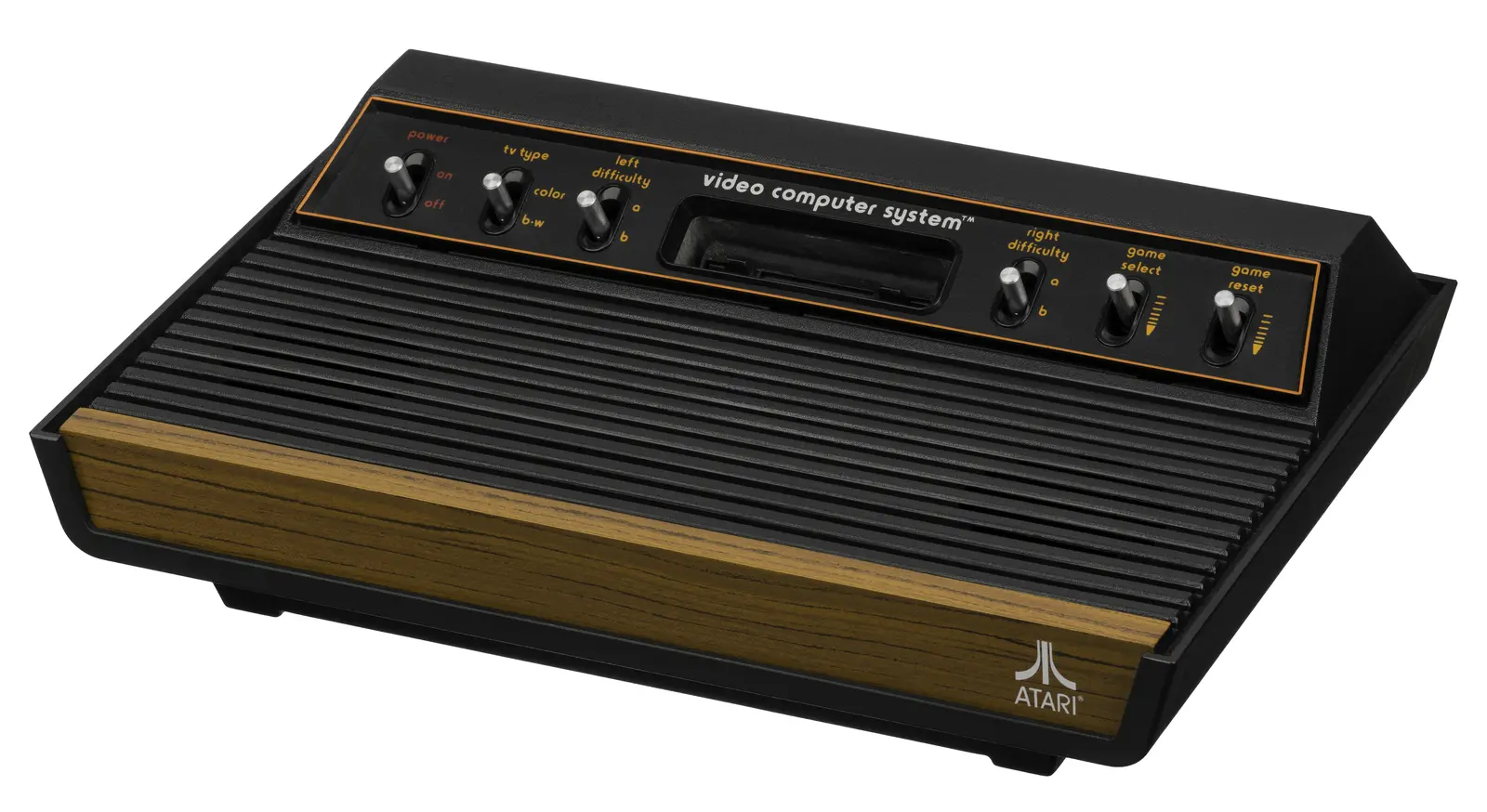
The next step mattered far more. The 1977 Atari Video Computer System played interchangeable cartridges. It was not the first console to do so, but it was the machine that established the model: one device, an ever-growing supply of software. Its cut-down 6507 processor, TIA graphics-and-sound chip and just 128 bytes of RAM forced programmers to become extraordinarily inventive.
Sales accelerated when Space Invaders arrived in 1980. Independent developers also discovered the platform. Activision, founded by former Atari programmers, used games such as Pitfall! to demonstrate that cartridges did not have to come from the hardware manufacturer. The ecosystem on which today’s console industry is still based had begun to form.
Success eventually ran into an overcrowded market, too many poor games and unrealistic sales forecasts. E.T. became the most famous symbol of the 1983 American video-game crash, but it was not the sole cause. By then, Atari already had something else: computers that combined the company’s game technology with keyboards, BASIC and expansion.
02 / The Atari 400 and 800
A home computer designed by game makers
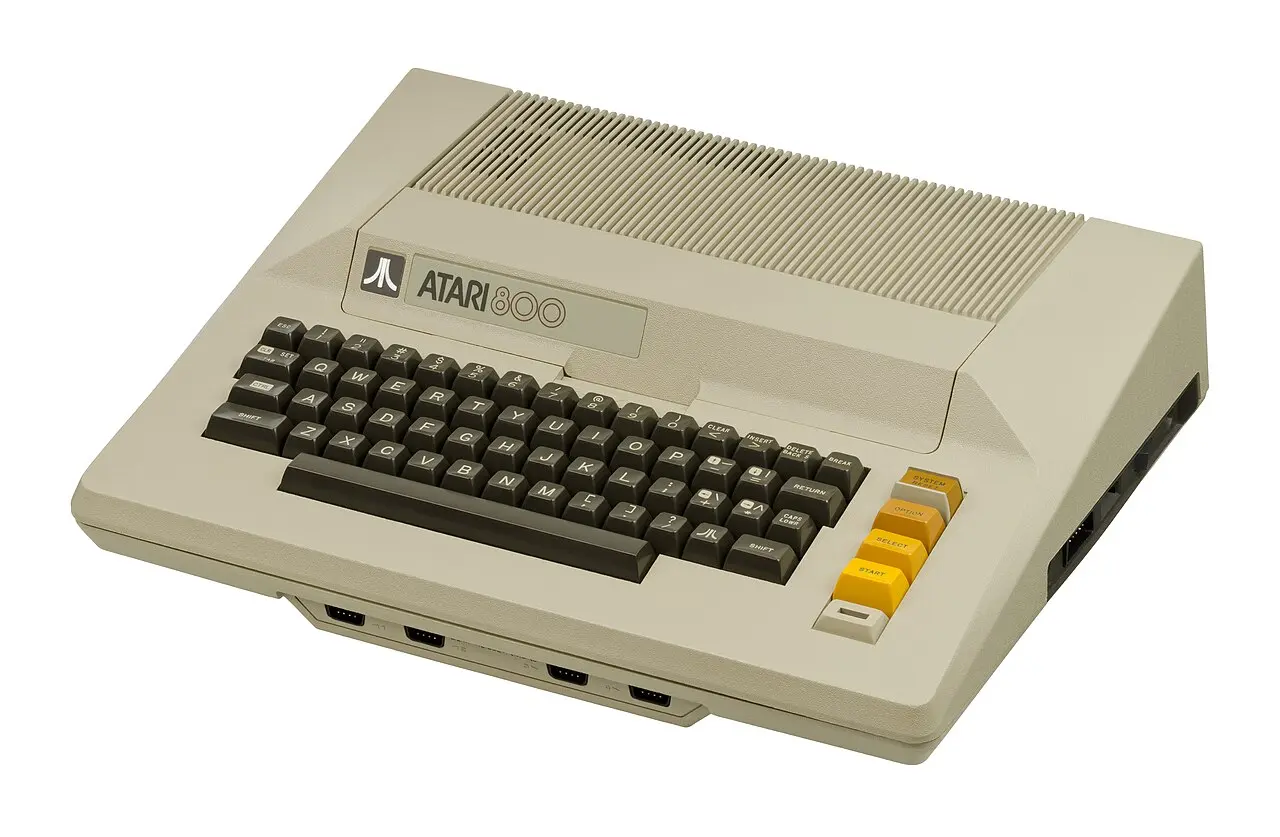
Atari announced the 400 and 800 in 1979 as two versions of one powerful design. The 400 was the affordable entry model; the 800 was the full computer.
Both machines used a MOS 6502 processor running at roughly 1.8 MHz. That tells only part of the story. Custom chips removed much of the workload: ANTIC constructed the display line by line, CTIA and later GTIA handled colour and moving objects, while POKEY managed sound, the keyboard, serial communication and controller input. The main processor did not have to do everything itself.
The Atari 400 had a flat membrane keyboard. It was rugged and resistant to spilled drinks, but no pleasure for typing long texts. The Atari 800 offered a real keyboard, internally expandable memory and a case with almost excessive electrical shielding. Both models had four joystick ports—ideal for multiplayer games—and used cartridges, cassettes or floppy disks.
Peripheral connection was equally forward-looking. Drives, printers and modems could be daisy-chained through the Serial Input/Output port, or SIO. Every peripheral contained its own electronics and identification. To the user, it felt like an early proprietary version of plug-and-play.
Atari BASIC was supplied or sold on cartridge. It was not the fastest BASIC dialect, but it made the machine approachable. Many owners learned to program by typing magazine listings, changing values and watching what happened on screen.
Those who did not write their own software could choose from educational programs, word processors, graphics tools and, above all, a rapidly growing games library. Atari deliberately kept the border between computer and console thin.
03 / The hidden power
Four chips, one distinctive character
-
01
ANTIC
A display processor built around display lists. It could combine different graphics modes on one screen without asking the 6502 to draw every line itself.
-
02
CTIA and GTIA
These chips determined colour and created movable “player/missile” objects: Atari’s version of what later became widely known as sprites.
-
03
POKEY
Four sound channels gave Atari games a characteristic voice. The chip also handled the keyboard, timers, serial input and analogue controllers.
04 / Software that sold the machine
From Star Raiders to M.U.L.E.
The best Atari software treated the custom hardware as a starting point, not an optional extra. The computers therefore felt faster and more alive than their clock speed suggested.
Doug Neubauer’s Star Raiders was the definitive early demonstration: a three-dimensional space battle with a galactic chart, several viewpoints and a sensation of speed that was astonishing in 1979. It helped prove that a home computer could be more than a machine for administration or simple BASIC programs.
Chris Crawford’s Eastern Front (1941) showed that a complex strategy game could also be clear and visually appealing. Classics including M.U.L.E., Archon, Ballblazer and Rescue on Fractalus! followed. Many appeared on other systems too, but their Atari versions often possessed a special smoothness and colour.
These were not simply consoles with keyboards. AtariWriter produced documents, drawing software and the Atari Touch Tablet supported visual creativity, and modems opened a route to bulletin-board systems. Music, educational and programming software made the computer an open tool. The ability to alternate between playing and making was central to the 8-bit Atari’s appeal.
05 / The XL generation
Better-looking, cheaper and finally 64K
By the early 1980s, the original 400 and 800 were too large and expensive to manufacture. Atari also needed an answer to Commodore’s aggressive price cuts.
The 1983 Atari 1200XL looked modern and provided 64 KB of memory, but it was expensive and not entirely trouble-free with older software and expansions. It disappeared quickly. The following 600XL and 800XL were much more convincing: smaller, cheaper to build, equipped with Atari BASIC in ROM and fitted with a Parallel Bus Interface for expansion.
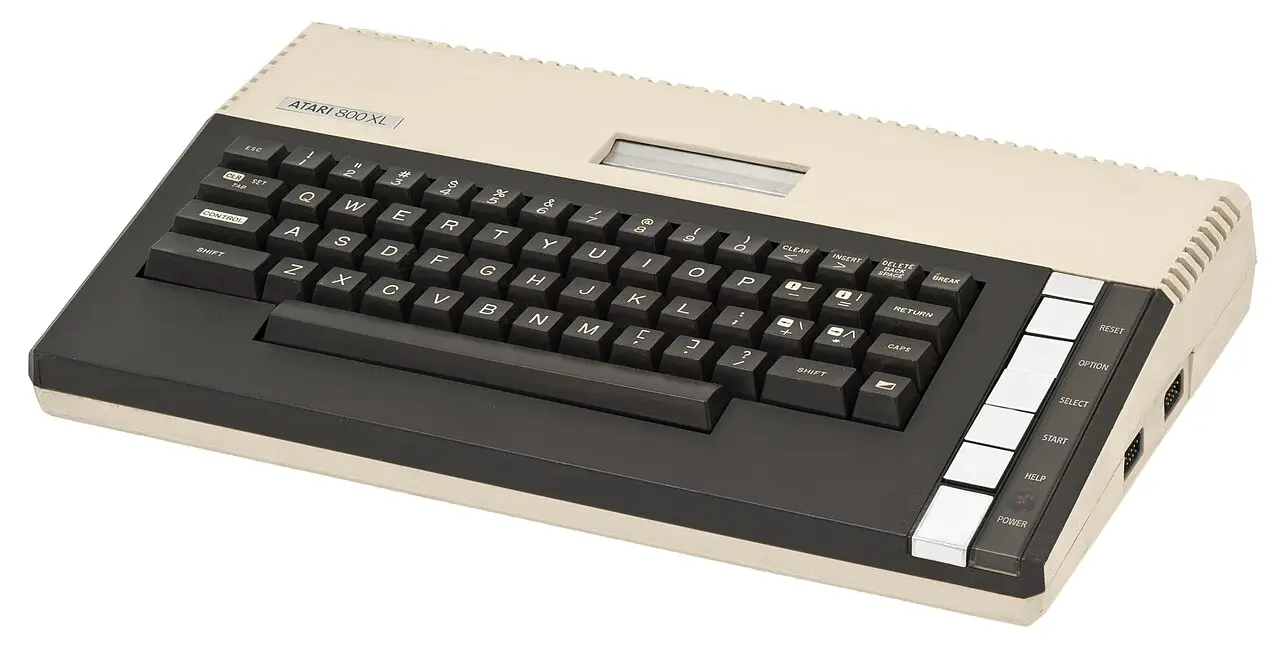
The 600XL initially had 16 KB and was intended to replace the 400. The 800XL offered 64 KB and became the family’s most successful model. Technically, it remained recognisably an Atari 8-bit. Existing games and peripherals therefore remained largely usable, while the machine looked less bulky beside a Commodore 64 or Sinclair ZX Spectrum.
Atari nevertheless struggled to turn its technical lead into market dominance. Prices changed rapidly, availability was sometimes uneven and the company competed simultaneously in arcades, consoles and computers. The name Atari also meant “games” so strongly that buyers seeking a serious computer did not always consider it first.
06 / XE: a second life
The 8-bit family survives the crisis
Following the losses of 1983, Warner Communications sold Atari’s consumer division to Jack Tramiel in 1984. The former Commodore chief made cost control his first priority.
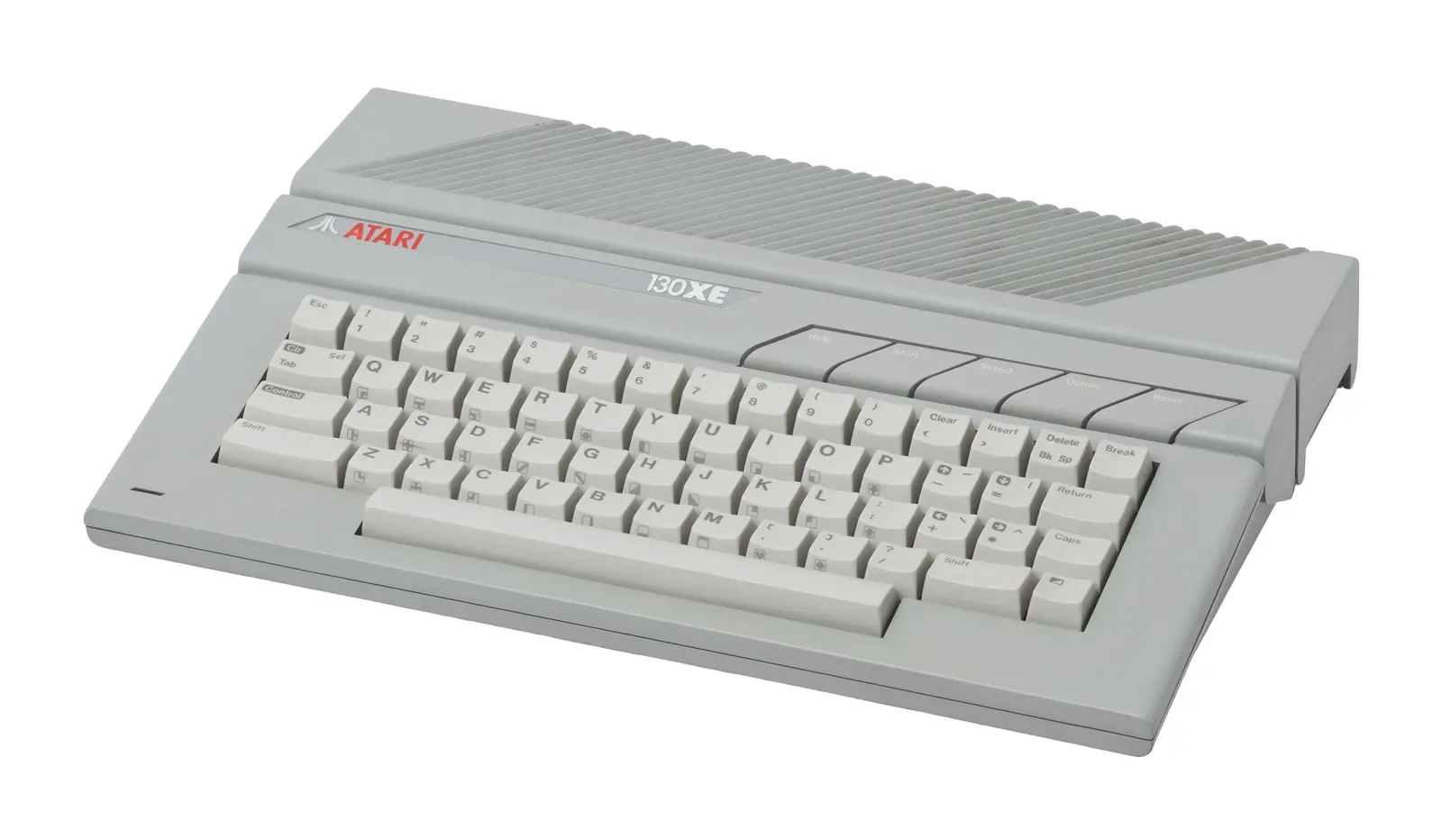
The 1985 65XE and 130XE adopted the grey, angular styling of the new ST. Beneath the surface, the familiar 8-bit architecture survived. The 65XE offered 64 KB, the 130XE 128 KB. Bank switching allowed software to reach the additional memory, even though the 6502 could never see it all at once.
In 1987, Atari repackaged the same technology once more as a console. The Atari XE Game System, or XEGS, came with a detachable keyboard and accepted both cartridges and traditional Atari peripherals. It was not a major commercial success, but it was the clearest confirmation that Atari’s computer and console worlds had always belonged to the same family.
07 / The leap to 16-bit
The Atari ST starts again
While the XE range served established users, the new Atari under Jack Tramiel developed a far more powerful computer. In 1985, the ST demonstrated that a graphical 16/32-bit machine did not have to carry an Apple Macintosh price.

-
520ST
A Motorola 68000, 512 KB of memory, a mouse and the graphical GEM interface brought the capabilities of more expensive computers within reach.
-
1040ST
With 1 MB of memory inside the keyboard case, the 1040ST offered a remarkable amount of computer for its price.
-
The musician’s computer
Built-in MIDI ports and dependable timing made the ST a studio fixture. Cubase and Notator began their long histories here.
-
A desktop at home
Windows, icons and a mouse made the transition from BASIC commands to graphical computing visible.
The ST was not technically a continuation of the 400 and 800. Its philosophy was nevertheless familiar: use intelligent hardware to make a powerful machine affordable, then let play, creativity and serious work coexist. Atari consequently became much more than the company behind Pong or the 2600. It became one of the brands that defined what a home computer could be.
08 / Sources & further reading


