Home computers / Chapter 02
Commodore:
from PET to home-computer empire
Commodore first put a complete computer on the desk, then fought its way into millions of living rooms—and finally squeezed the experience into a suitcase.
01 / The PET
The computer as a complete object
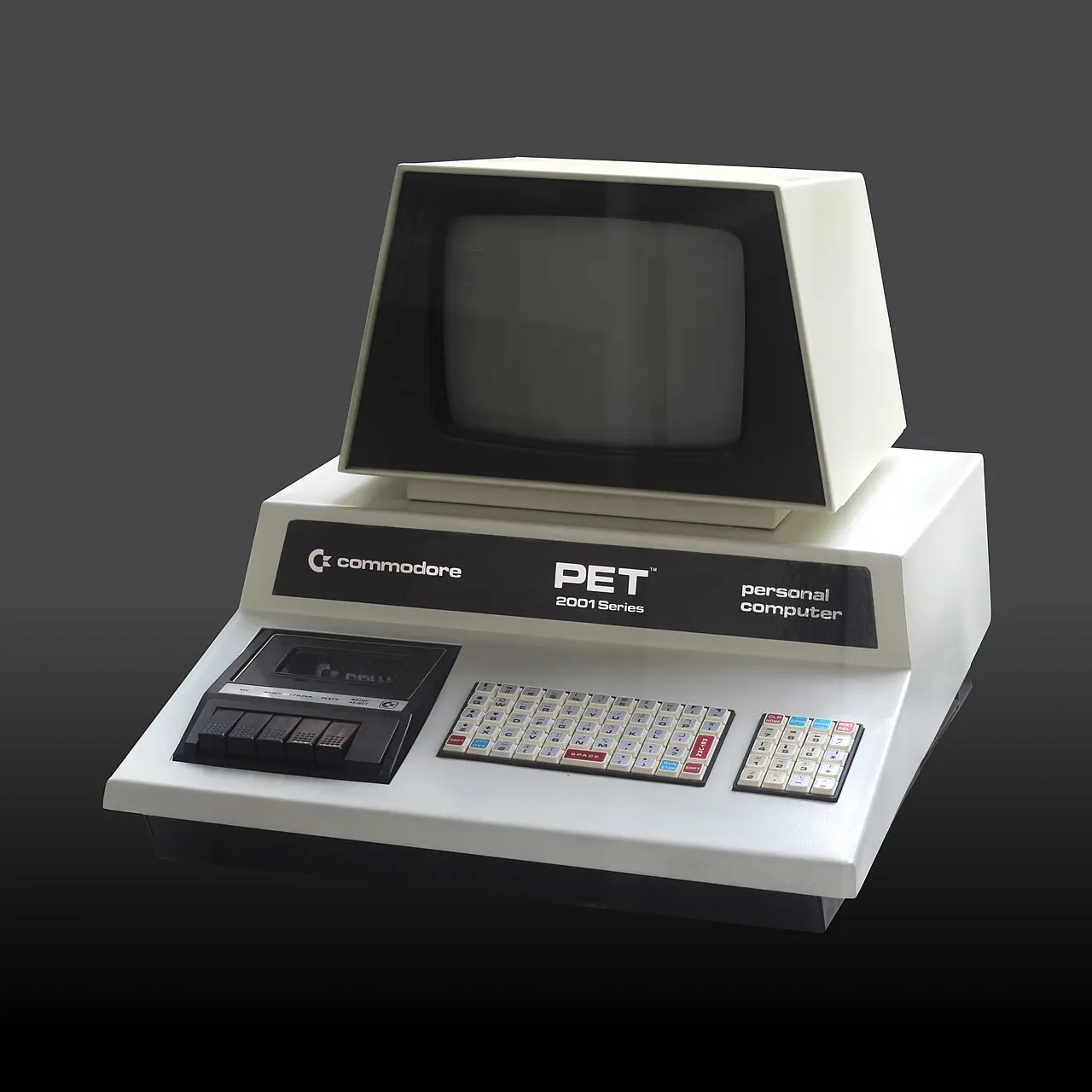
In 1977, the Commodore PET 2001 looked less like a hobby kit and more like a machine that had arrived from the future. Monitor, keyboard, computer and cassette storage formed a single, purposeful object.
Commodore had made its name with typewriters and calculators. When competition devastated the calculator business, Jack Tramiel chose vertical integration: Commodore bought chipmaker MOS Technology in 1976. That acquisition brought both the inexpensive 6502 processor and engineer Chuck Peddle into the company.
The PET used that 6502 at about 1 MHz and initially came with 4 or 8 KB of memory. Its small monochrome screen showed text and PETSCII graphics. The built-in Datasette made programs easy to store, although the tiny calculator-style “chiclet” keyboard made serious typing less inviting.
The first PET belonged to the celebrated “1977 Trinity”, alongside the Apple II and TRS-80. Where the Apple emphasised colour and expansion, the PET’s great idea was integration. Its steel case and all-in-one construction later made it especially attractive to schools and businesses. In Europe, later machines were often sold under the CBM name because Philips held rights to the PET trademark.
02 / The C64
The machine that won the price war
Introduced in 1982 at $595, the Commodore 64 combined a full 64 KB of memory with graphics and sound hardware that could compete with much more expensive machines.
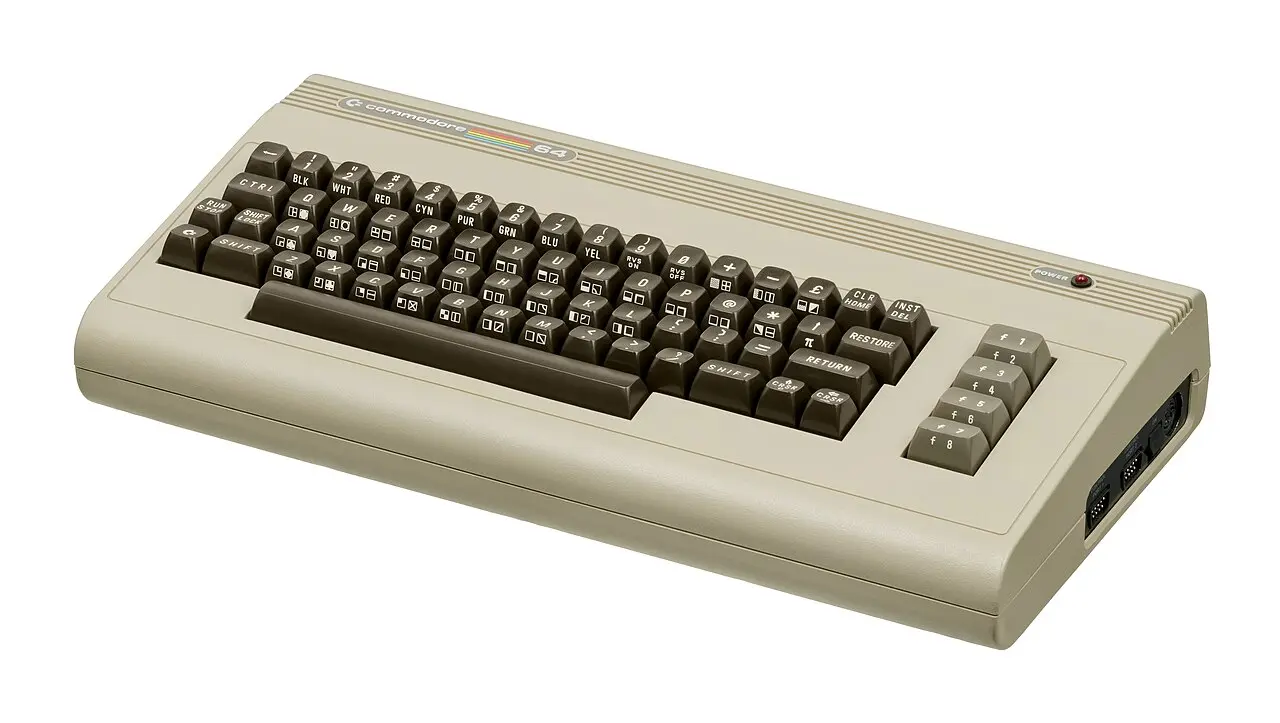
Its VIC-II video chip delivered colour, scrolling and hardware sprites; the SID chip gave programmers three expressive sound voices and filters. Those custom chips helped turn the C64 into a formidable games machine, but it also ran word processors, educational software, music programs and the GEOS graphical environment.
Commodore controlled much of its own chip production, sold computers through ordinary retail chains and repeatedly cut prices. The resulting home-computer price war hurt rivals and sometimes Commodore itself, but it gave the C64 extraordinary reach. Sales estimates vary, yet its status as the best-selling single computer model is central to its legend.
03 / Why the C64 mattered
A platform, a culture and a familiar blue screen
- 01
Technology became affordable
Custom chips and aggressive pricing put capable graphics, sound and 64 KB of memory within reach of an enormous audience.
- 02
Software travelled everywhere
Games on cassette and disk circulated through shops, clubs, schoolyards and copied collections, creating a vast shared library.
- 03
Users became makers
The BASIC prompt invited experimentation. Games, demos, music and bedroom-coded software turned owners into participants.
04 / The SX-64
A Commodore 64 packed for the road
The SX-64 transformed the familiar home computer into a spectacular “luggable”: a metal-and-plastic case with a five-inch colour screen, built-in 5¼-inch disk drive and detachable keyboard.
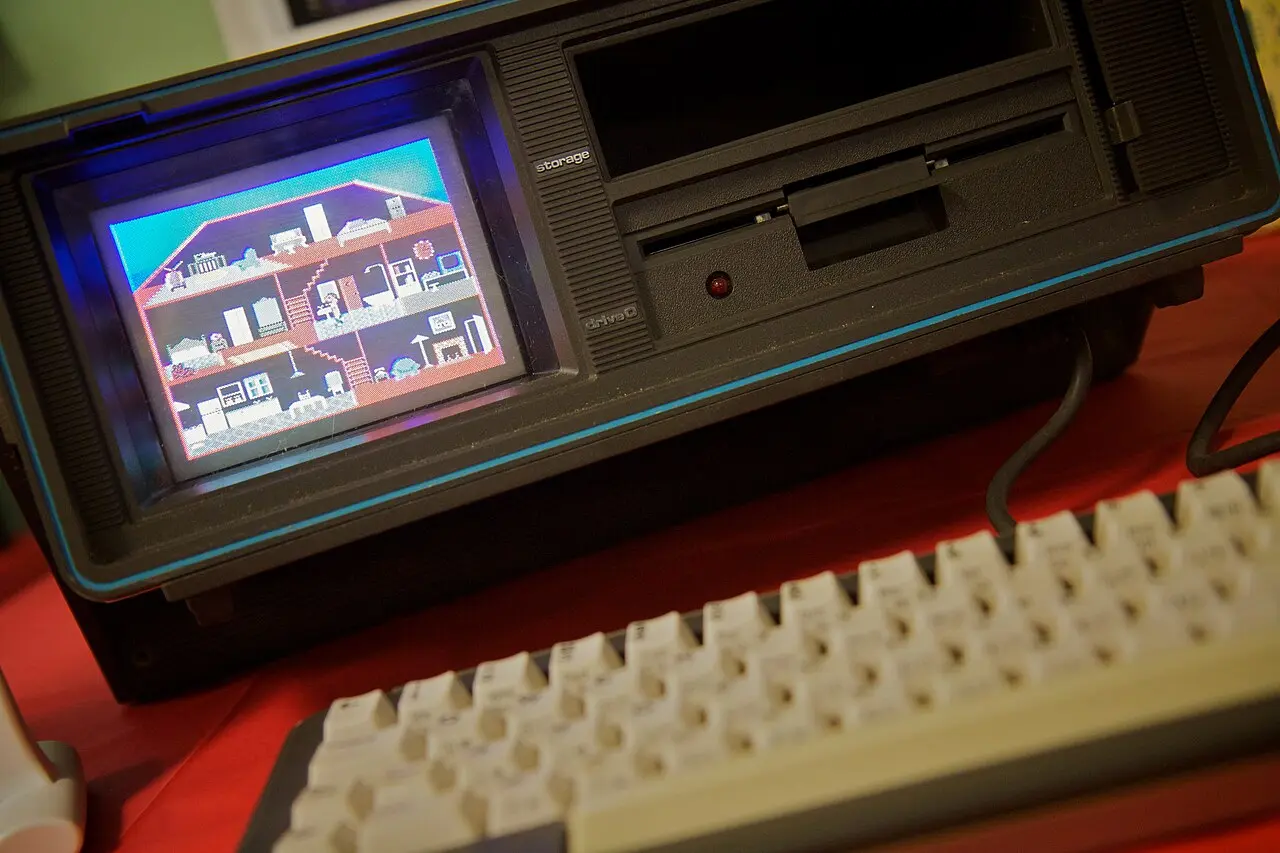
Announced in 1983 and reaching buyers around the turn of 1984, the SX-64 is widely described as the first portable computer with a colour display. “Portable” was a relative term: it weighed roughly 10.5 kilograms and had no battery, so it always needed a wall socket.
Inside, it remained largely compatible with the C64. Yet portability brought compromises. The tiny display was better suited to games and demonstrations than long working sessions, the cassette and RF connections disappeared, and the launch price of $995 placed it well above an ordinary C64. It never became a mass-market success, but few machines express early-1980s technological confidence so vividly.
05 / Beyond the three icons
Commodore in fast-forward
PET, C64 and SX-64 tell only part of the story. Commodore repeatedly moved between low prices, ambitious hardware and bruising internal conflict.
Commodore begins
Jack Tramiel establishes the company in Toronto, initially working with typewriters before moving into calculators.
MOS Technology
The chipmaker behind the low-cost 6502 becomes part of Commodore and supplies the technical foundation for its computer business.
VIC-20
A colourful, relatively inexpensive home computer broadens Commodore’s audience and prepares the retail ground for the C64.
C128 & Amiga
The C128 extends the 8-bit line, while the Amiga 1000 opens a radically more capable 16/32-bit future.
Amiga 500
A more affordable Amiga becomes a European favourite for games, graphics, animation and music.
Bankruptcy
After years of management changes, missed opportunities and weakening finances, Commodore International closes.
06 / Sources & further reading


