Home computers / Chapter 01
Apple I & II:
from board to breakthrough
One was a beautifully economical circuit board for enthusiasts. The other looked like an appliance, produced colour graphics and invited an entire industry to build upon it.
01 / The board
A computer before there was a computer company
The Apple I began as Steve Wozniak’s personal project and as something to demonstrate at the Homebrew Computer Club. Its elegance lay in how much it achieved with relatively few components.
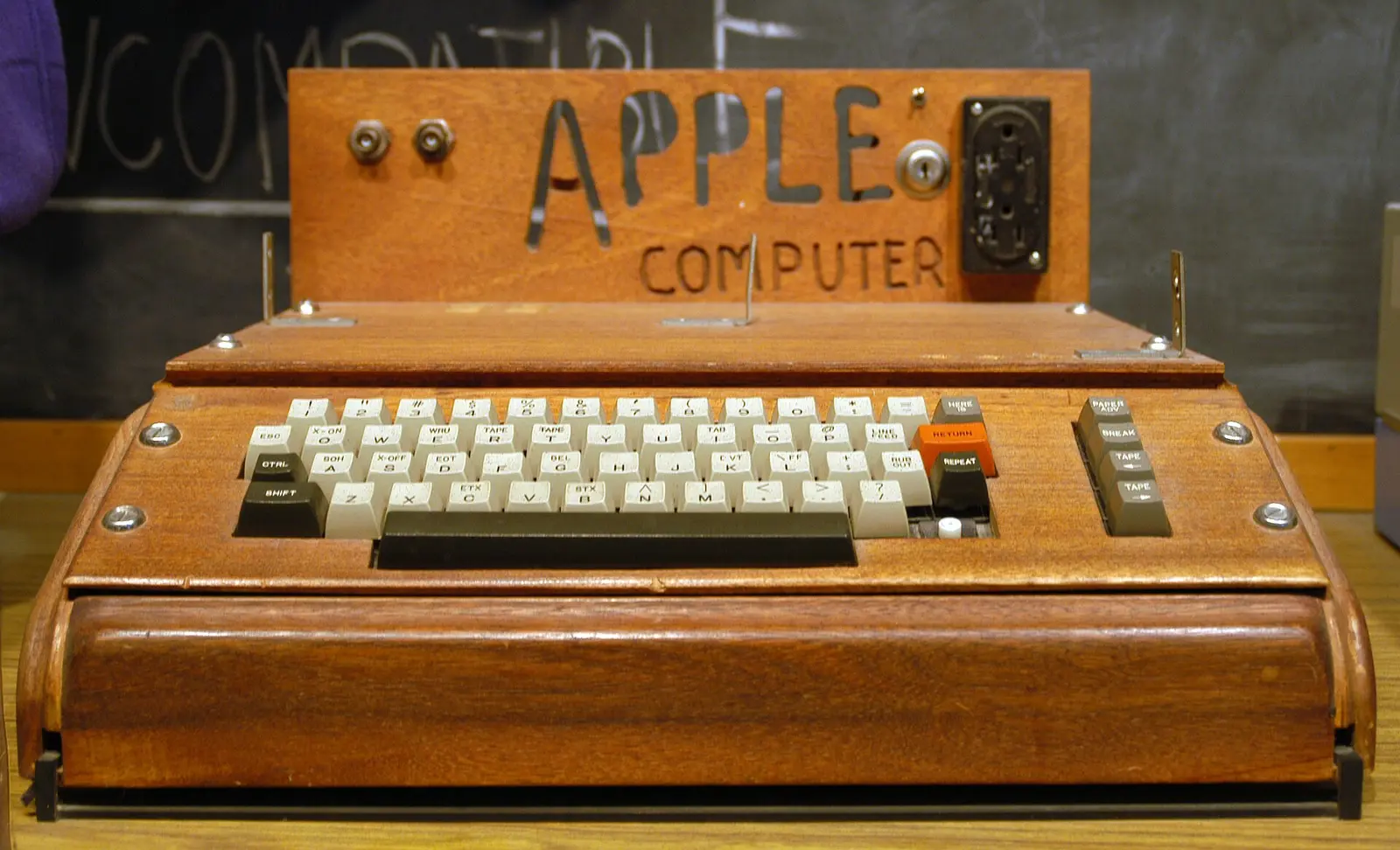
In 1976, a “personal computer” usually meant a box of parts for a technically confident hobbyist. Many machines communicated through rows of switches and lights. Wozniak’s design was different: connect a keyboard and a television display, and text appeared on screen. The MOS Technology 6502 processor kept the price within reach.
Steve Jobs saw a product where Wozniak saw an ingenious machine. Paul Terrell of the Byte Shop ordered fifty Apple I boards on the condition that they arrived assembled. They did—but buyers still had to supply a case, power supply, keyboard and display. The Apple I was not yet a home appliance. It was the bridge to one.
02 / The complete machine
The Apple II changes the proposition
Shown at the first West Coast Computer Faire in April 1977 and shipped that June, the Apple II turned the underlying idea into a consumer product.
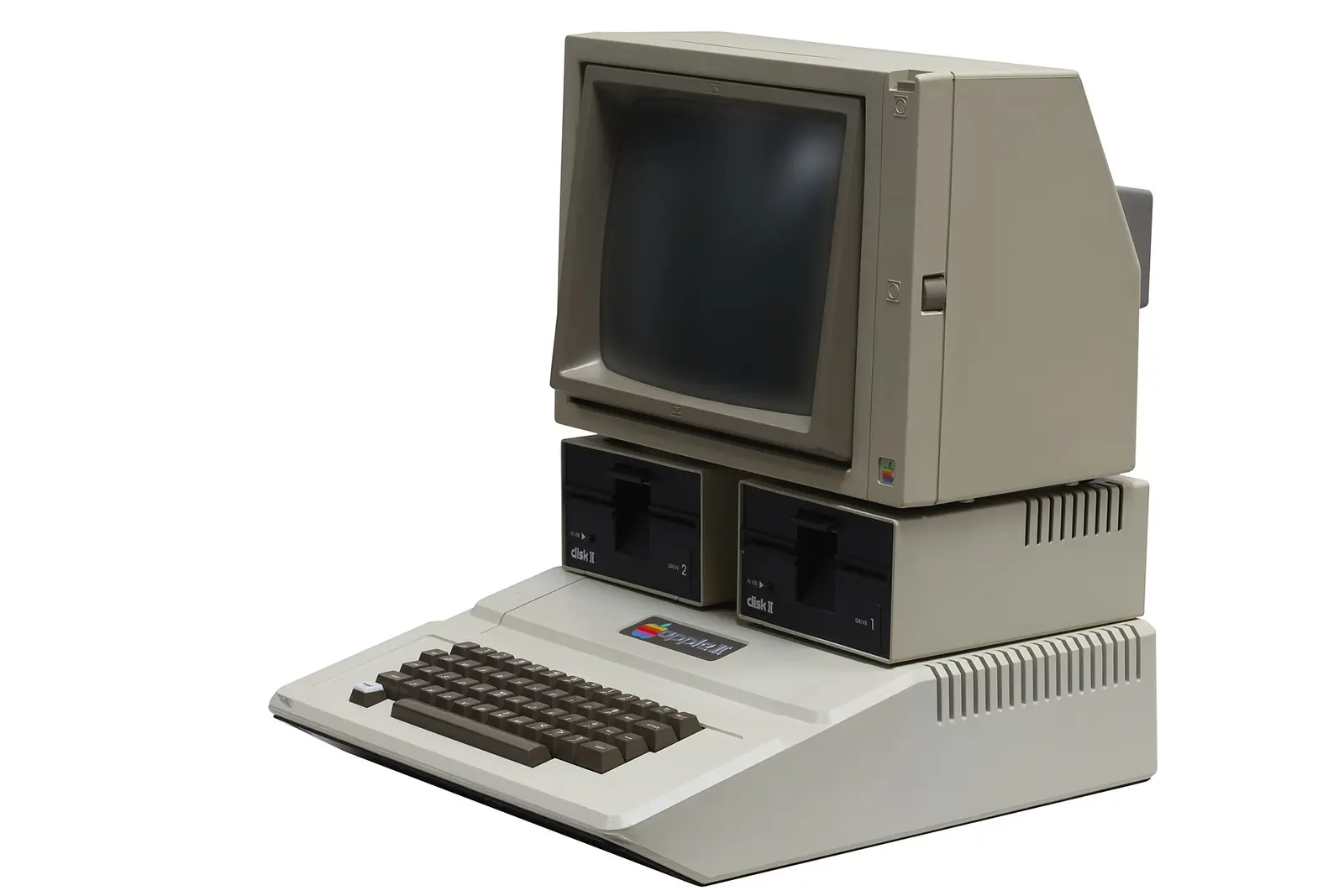
Its moulded case and integrated keyboard made it approachable. It could connect to a television or monitor, started directly into BASIC and offered colour graphics, sound, game-paddle support and eight expansion slots. The original 4K configuration sold for $1,298. At first, programs and data were stored on cassette tape, as with many rivals.
The expansion slots were crucial. Apple supplied a platform; other companies could add printers, memory, communications cards and specialist hardware. Wozniak’s economical Disk II controller and Apple DOS made floppy storage practical in 1978. A year later VisiCalc transformed the Apple II into a serious business tool: the spreadsheet became one of personal computing’s first “killer apps”.
03 / Why it mattered
More than a successful box
- 01
It made computing visible
Colour, sound and games showed immediately what a computer could do—without requiring a front panel full of switches.
- 02
It created an ecosystem
Open expansion slots encouraged software makers and hardware companies to treat the Apple II as a platform.
- 03
It crossed markets
Games drew families, education put Apples in schools, and VisiCalc gave businesses a reason to buy.
04 / After the Apple II
Apple in fast-forward
The Apple II family remained on sale in various forms until 1993. Alongside it—and eventually beyond it—Apple repeatedly reinvented what its computers looked like and how people used them.
Lisa
A graphical interface and mouse reached a commercial desktop, but the $9,995 price made Lisa a landmark rather than a hit.
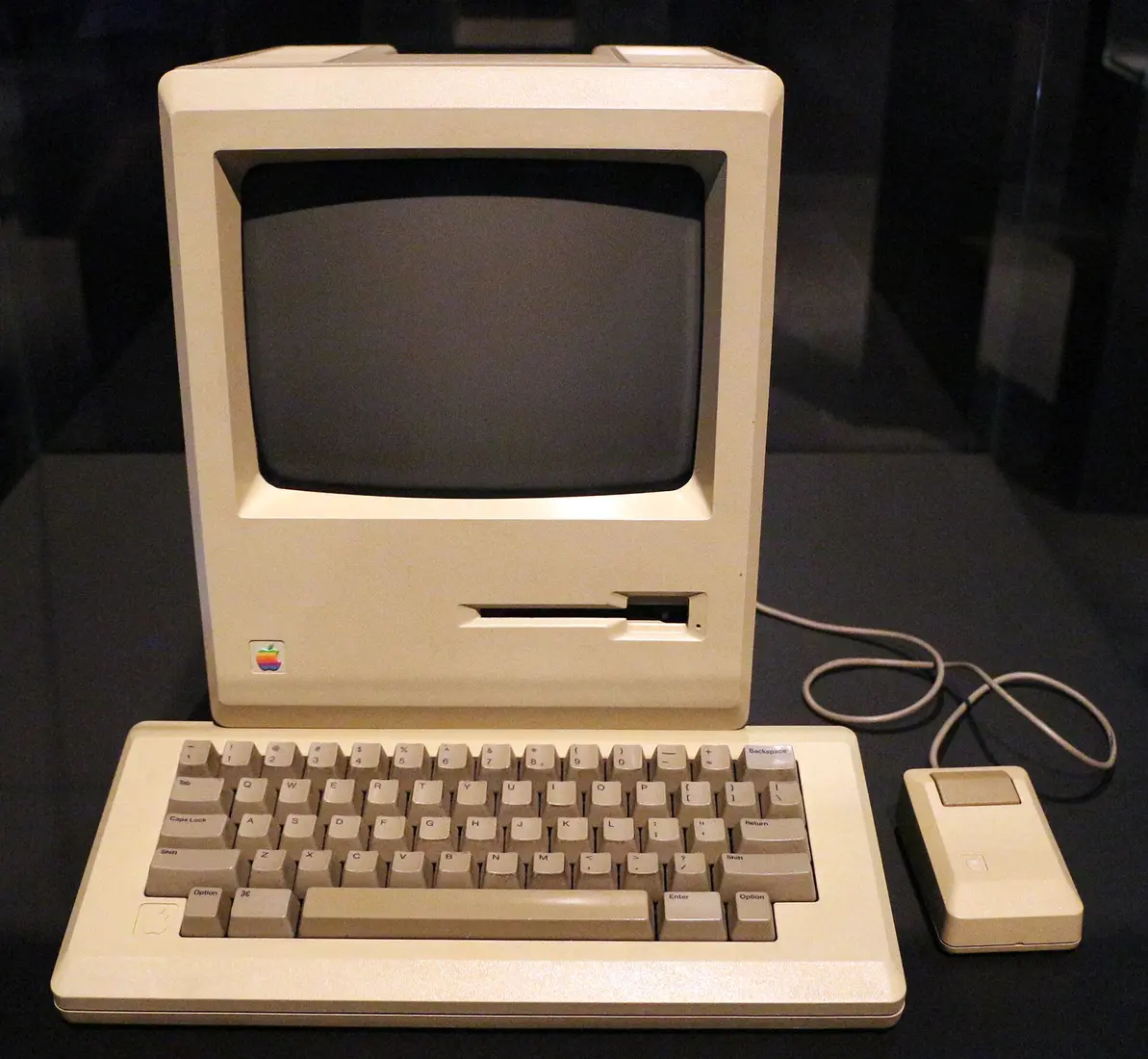
Macintosh
The compact Mac brought graphical computing to a much wider audience and established a design language built around icons, windows and a mouse.
PowerBook
Moving the keyboard towards the screen created palm rests and space for a trackball—an arrangement that shaped the modern laptop.
Power Macintosh
Apple moved the Mac from Motorola’s 68000 family to PowerPC, its first major processor-architecture transition.
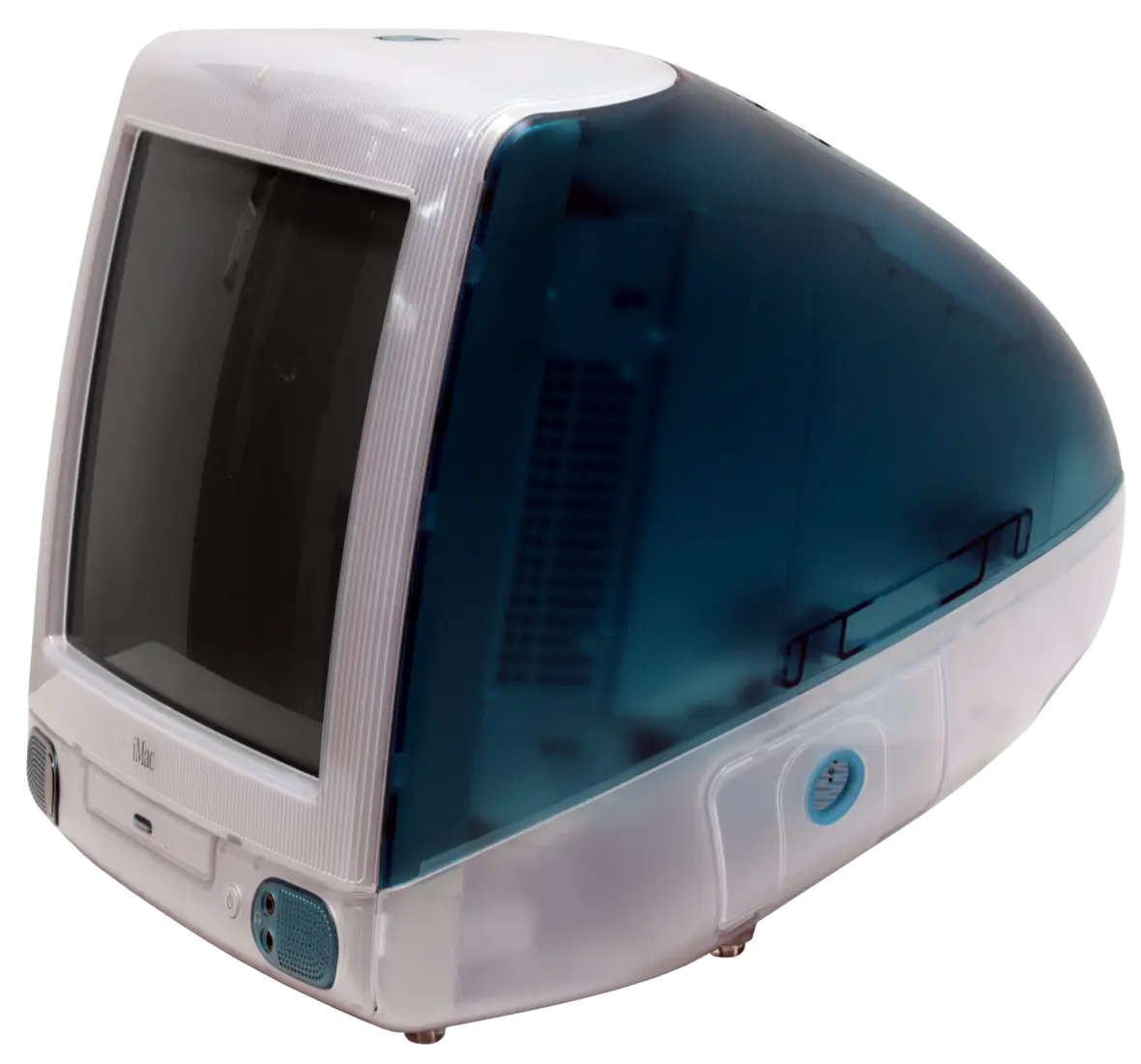
iMac G3
The translucent Bondi Blue all-in-one made the computer friendly and conspicuous again—and became the clearest symbol of Apple’s recovery.
Mac OS X
Built on technology acquired with NeXT, Mac OS X replaced the classic Mac system and became the software foundation for Apple’s next era.
Intel Macs
After announcing the change in 2005, Apple began shipping Intel-based Macs in 2006, opening a decade and a half of closer technical alignment with the PC world.
MacBook Air
An exceptionally thin aluminium notebook dropped the built-in optical drive and treated wireless connections as the default.
Apple silicon
The M1 was the first Apple-designed chip built specifically for the Mac, combining high performance with striking power efficiency.
05 / Sources & further reading


