Culture & memory / Chapter 12
Daily life with a home computer
The computer did not stand apart from the family. It had to win a place among homework, television, parents, brothers and sisters.
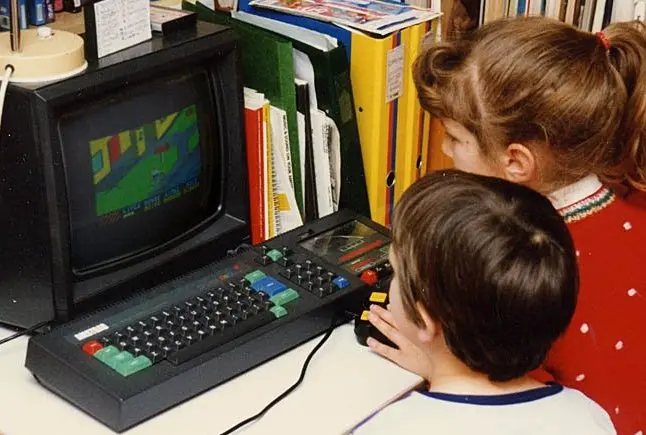
01 / Among the furniture
The computer entered the household
A tangle of cables lay across the table. The television was tuned to the right channel, the cassette recorder was turning and a block blinked on the screen.
If everything went well, a game appeared after a few minutes. If it did not, the entire ritual began again. The home computer of the 1980s was more than a device. It changed the living room, occupied the television and brought children together around one keyboard.
It was sometimes used for homework or household accounts, but more often for playing, experimenting and programming. For many people this was not just their introduction to computers. It was also a new chapter in everyday life.
02 / No fixed place
From dining table to computer corner
The first home computer did not always get a desk of its own. Many homes simply had no room for one.
A Commodore 64, Atari, ZX Spectrum or Philips MSX therefore appeared on the dining table, a small table in the living room or a bedroom desk. Everything sometimes had to be packed away after use. The computer returned to its box or a cupboard, accompanied by its power supply, joystick and cassette recorder.
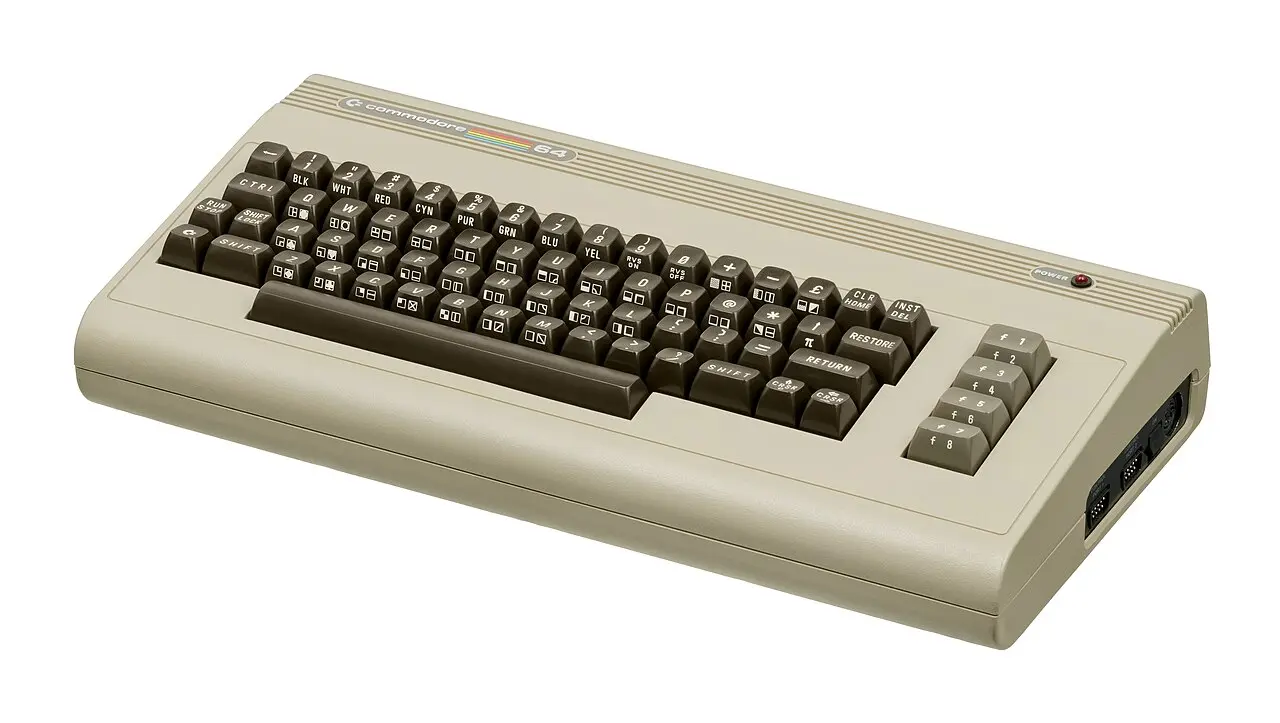
Other machines acquired a permanent home. A proper computer corner gradually formed around them: monitor, disk drive, box of tapes or disks and perhaps a printer. Manuals, magazines and scraps of paper covered with commands lay nearby. It was rarely tidy, but to its owner it was a small workshop.
03 / The shared television
Who gets the screen?
Many home computers connected directly to a television. That was affordable and practical, but the television belonged to the whole family.
Computer time had to fit around the TV schedule. A game might have to end when the news began. Wednesday afternoons and Saturday mornings offered more freedom, but parents usually had first claim in the evening.
This led to negotiations that now feel almost unimaginable: one more game, five more minutes, just let me finish this. A dedicated monitor was a luxury. Its owner no longer had to wait for the television and could leave the computer connected, making it a far more permanent part of the room.
04 / The starting ritual
The user had to act before the computer did
Switching on often produced a BASIC screen, a blinking cursor and an inviting word such as READY.
A program then had to be loaded from cassette, disk or cartridge. A cartridge was quick: insert, switch on and begin. A disk brought spinning and searching. A cassette required patience. The tape was rewound, its counter set to zero and the correct command typed.
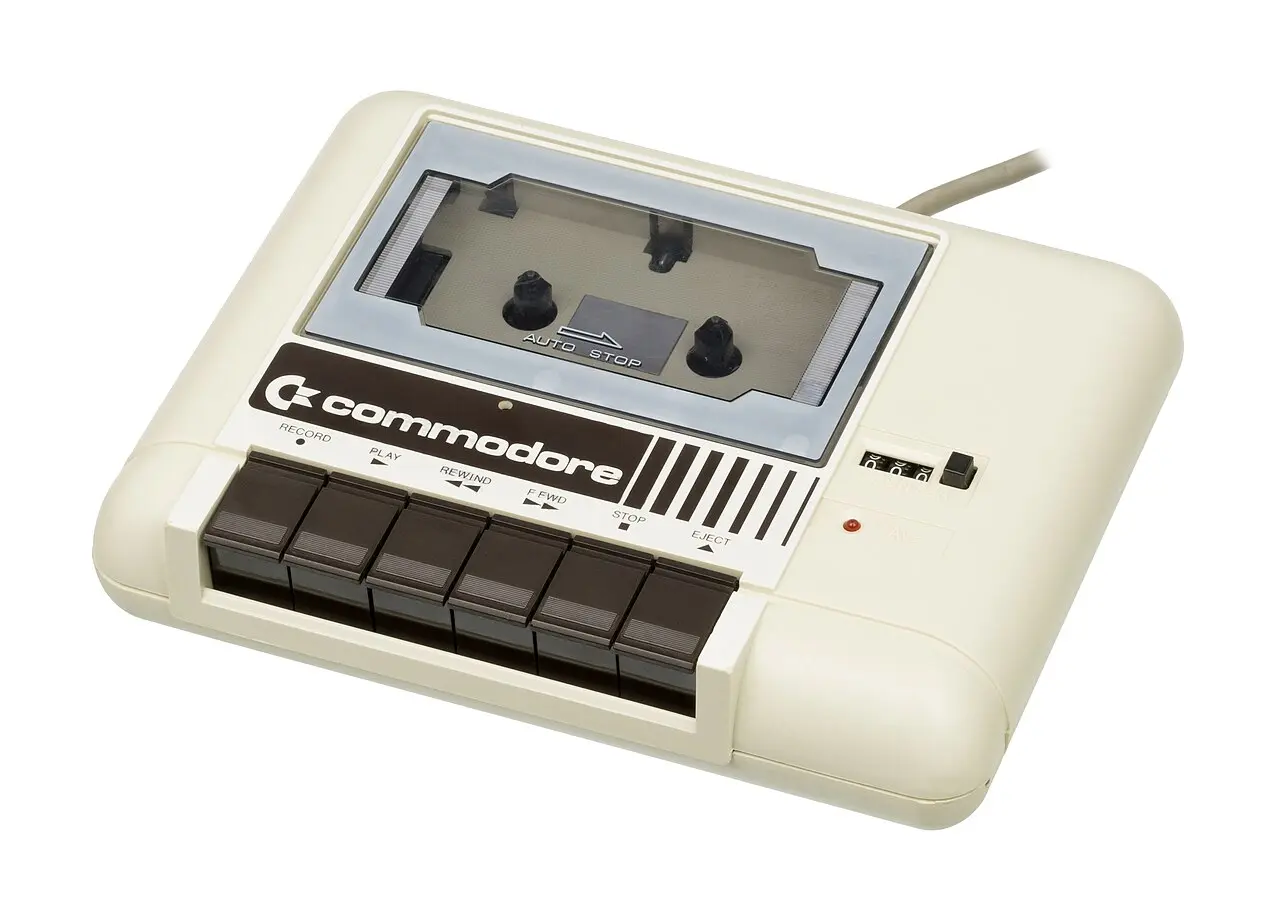
You watched coloured bars, listened to make sure the recorder was still running and hoped loading would not fail near the end. A game might take ten minutes to appear. Sometimes only an error message arrived. Because starting required effort, the moment a game finally appeared felt like a small victory.
05 / Together around one machine
A home computer was rarely personal
It was shared with brothers, sisters, friends and classmates. Everyone gathered around the same screen.
The owner often sat at the keyboard. Someone else held the joystick. The rest watched, offered advice or waited impatiently for a turn. Single-player games acquired household rules: lose a life and pass the joystick, or give everyone one attempt.
Playing together also meant solving problems together. How did you get past that enemy? Where was the hidden passage? There were no online videos to provide the answer. Knowledge moved through playgrounds, computer clubs or a friend who happened to have progressed further. Codes, POKE commands and hand-drawn maps passed from one person to another.
06 / Enter it yourself
Typing programs from a magazine
The home computer sometimes turned users into programmers without their noticing.
Magazines and books printed complete programs that had to be copied line by line. This could take hours. One wrong character was enough to stop the program. Then the hunt began: was that a zero or the letter O? Was a colon missing? Did the line number match?
The result was not always impressive. Perhaps only a simple figure or tiny game appeared. Yet it produced a special feeling: the computer did something because you had put it there. Many children then changed colours, words and rules. Software was not a sealed product, but something that could be examined and altered.
07 / Software you could hold
Where is my cassette?
Programs lived in cases, boxes and homemade covers, usually identified by handwritten labels.
One cassette could contain several programs. A counter reading on a scrap of paper showed roughly where each one began. Disks made searching easier, but they too acquired names, version numbers and warnings. Do not bend. Keep away from magnets. Do not touch the exposed surface.
Copying and swapping were common. A visit to a friend could end with a stack of tapes or disks to try at home. Not everything worked. Instructions might be missing, a file could be damaged or the game might require a different computer. To an outsider this looked like a messy box of media; to its owner it was a library of possibilities.
08 / For school
The promise of useful work
Parents often hoped the computer would help with learning, arithmetic, administration and word processing.
People wrote school reports, kept address lists and performed simple calculations. Some programmed a household budget or built a small customer database. A printer finally put neat text on paper, although the noise of a dot-matrix printer told the entire house that work was under way.
The balance between useful work and games remained a subject of discussion. The machine was expensive, and so were disks, joysticks, printers and new software. Anyone asking for an upgrade needed to explain why it was truly necessary. “It’s for school” became one of the most useful arguments of the computer age.
09 / Paper and people
The digital world extended beyond the screen
A home computer usually came with a substantial manual, often including a programming course.
There were also books, magazines, computer clubs and radio and television programmes. A useful tip was cut out or copied. One listing could occupy several days. Books lay open beside the screen, commands filled scraps of paper and solutions were kept in notebooks.
Most computers worked alone, but the culture around them was social. Software and knowledge travelled through schools, friends, shops, fairs and user groups. A small minority could already call bulletin boards with a modem, but for most users the network still consisted of people.
10 / Part of the household
Not only what the computer did, but what living with it felt like
The home computer gradually took its place among the television, stereo and bookcase. Language changed too: loading, saving, resetting and formatting entered the home.
- PLACEThe computer corner
A table, a screen and boxes of cables and software became a territory of their own.
- TIMEWaiting was part of it
Starting and loading were actions, not invisible background processes.
- TOGETHERSharing one screen
Playing meant watching, discussing, waiting and passing the joystick.
- MAKINGTrying it yourself
A blinking cursor invited commands, experiments and programs.
People looking back at a home computer rarely remember only its specifications. They remember where it stood, the friends who watched and the game that would never load properly. Perhaps that is an important part of the nostalgia: we remember not only what the computer could do, but above all what it was like to live with one.
11 / In this series
Everyday life with a home computer
This overview begins a series centred not on technology, but on the experience of living with it.
- Part 1The computer corner at homeWhere the digital world first entered the household.
- Part 2The television was the monitor too
- Part 3First wait, then play
- Part 4Typing programs from magazines
- Part 5Together at one screen
12 / Sources & images
Explore further
- National Museum of American History — A Tool and Toy for the Home
- Science Museum Group — Sinclair ZX80, designed for a television and cassette recorder
- Science Museum Group — BBC Micro and computer literacy
Image credits
Children using an Amstrad CPC 464 — Adrian Pingstone, public domain; resized and converted to WebP
Commodore 64 — Evan-Amos, public domain; previously resized and converted to WebP
Commodore Datasette — Evan-Amos, public domain; previously resized and converted to WebP


