Culture & memory / Chapter 13
The computer shop of the 1970s and 1980s
Among glass cabinets, demonstration machines and piles of brochures, people first encountered a computer they might one day own.
01 / At the back of the shop
The future stood on a counter
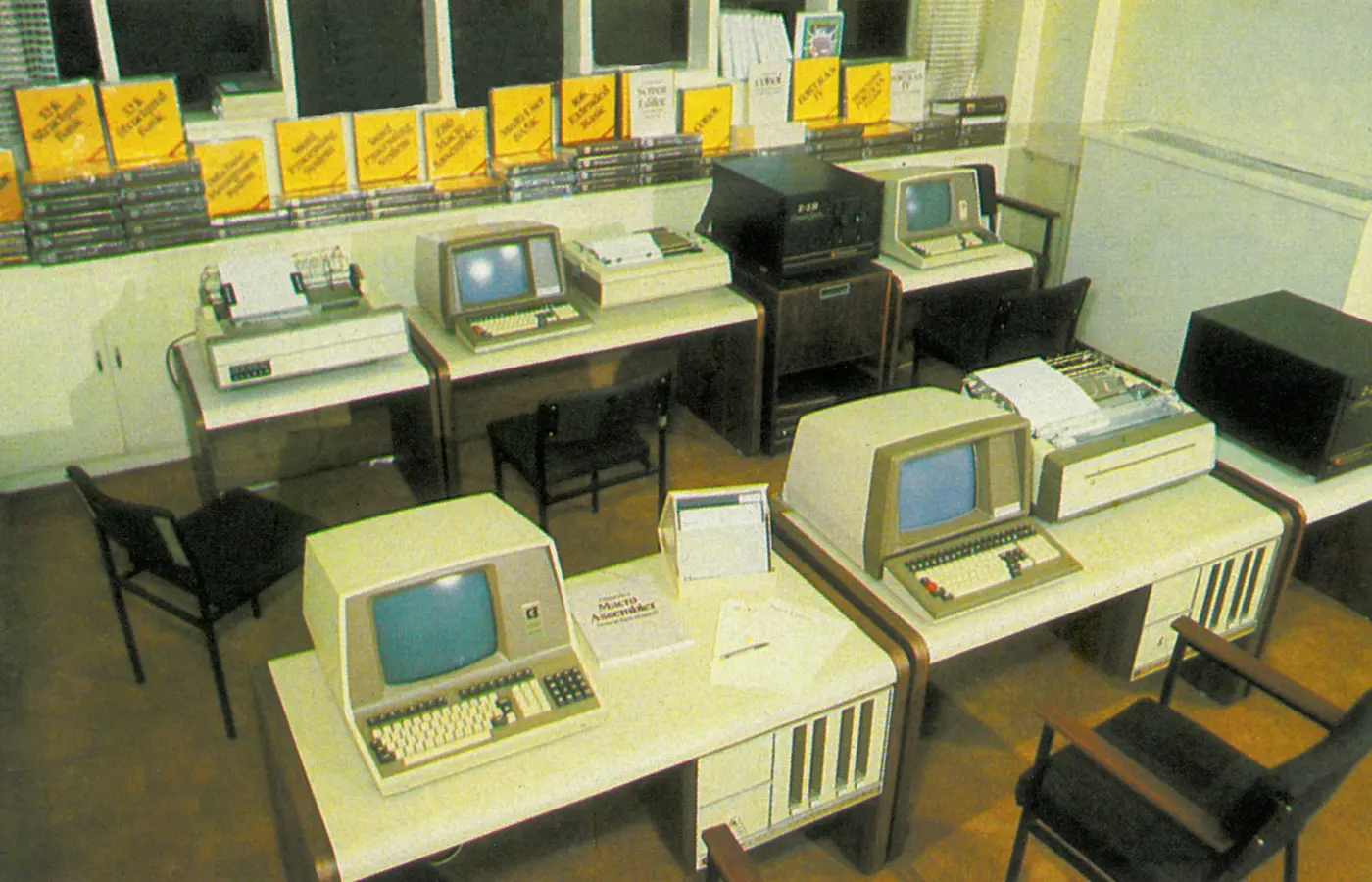
At the back of the shop stood a machine that almost nobody had at home. It was connected to a small monitor, with a cursor blinking on the screen.
Sometimes it ran a simple game. Sometimes it showed only a BASIC command entered by a salesperson. People stopped at the window. Children came inside to look once more at the latest Commodore, Atari, Sinclair or Philips. Parents wanted to know whether such a machine might also be useful for school.
The computer shop was more than a place that sold equipment. It was a showroom, meeting place, information desk and occasionally a small classroom. A technology that still felt strange and elusive became visible and touchable here.
02 / First for hobbyists
More workshop than shop
During the first half of the 1970s, the computer shop as it would later be known hardly existed.
Computers were large, expensive machines used by companies, universities and public institutions. Anyone wanting to experiment with microelectronics at home was more likely to visit an electronics shop. Its shelves held resistors, switches, circuit boards, power supplies and soldering irons. A computer might arrive as a box of parts.
The first microcomputers were mainly for technically minded enthusiasts. Some lacked an ordinary keyboard or display. Programs were entered with switches, lights or a home-built terminal. The salesperson was often an enthusiast too, offering help with soldering, expansion and faults as well as selling components.
03 / The complete computer
Now the salesperson had something to show
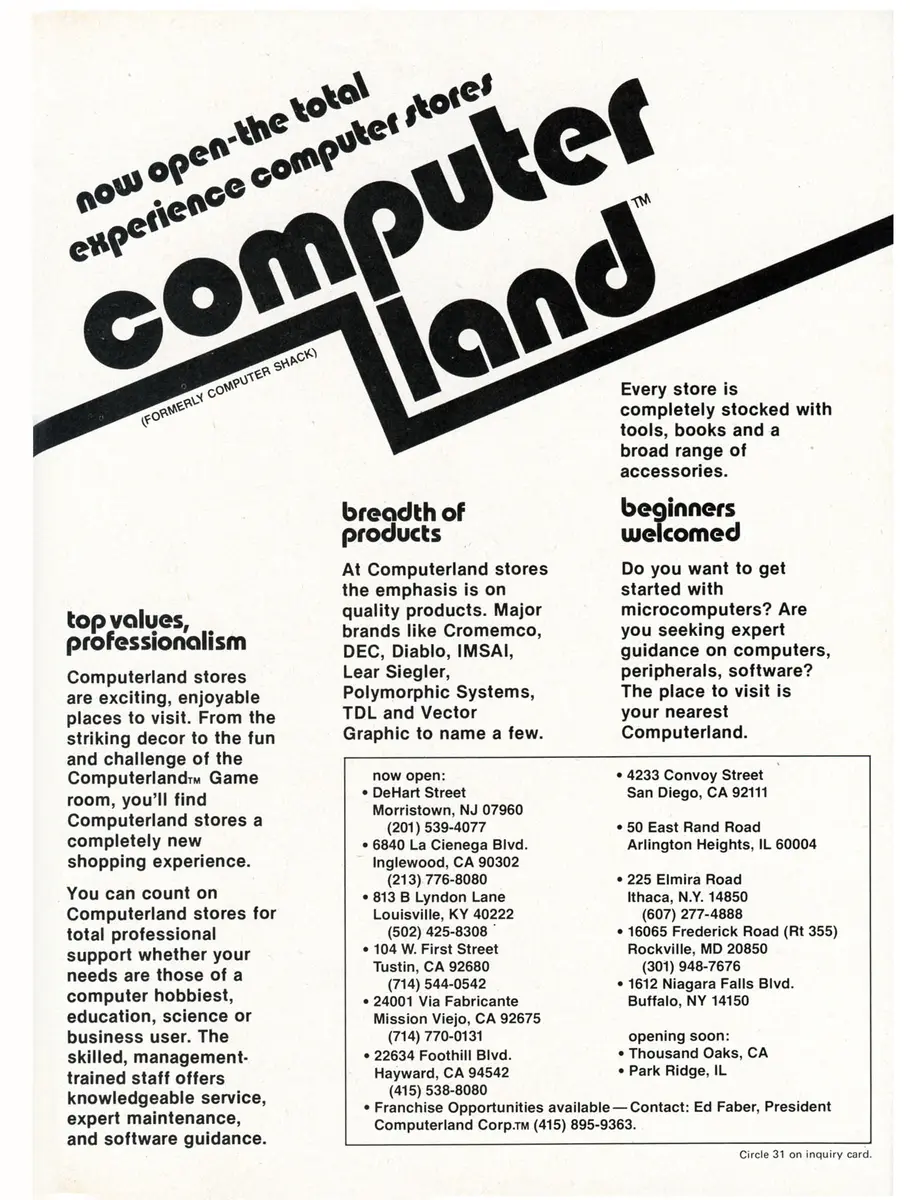
Towards the end of the 1970s, machines such as the Apple II, Commodore PET and TRS-80 arrived as more or less complete systems.
They had keyboards, could be connected to displays and offered a programming language the owner could use immediately. They were not yet within everybody’s reach. A system with a monitor, storage and printer could cost thousands.
Even so, a new kind of shop appeared. Ready-made computers joined the electronic components and were set up for demonstrations. Most customers had never operated a computer themselves. The salesperson had to explain not just how much memory it contained, but what anybody might actually do with it.
04 / Browsing without buying
The demonstration model became an attraction
During the 1980s, the computer shop became a favourite destination for schoolchildren and young enthusiasts.
They rarely had enough money to buy anything, but they wanted to see which machines had arrived. If staff allowed it, they typed a short program. After RUN, the screen filled with words or colours. It was hardly sophisticated, yet it proved that the computer obeyed instructions they had entered themselves.
Not every shopkeeper welcomed these young visitors. Keys were pressed endlessly, joysticks endured rough treatment and settings were changed. Some machines could be touched only under supervision. Other retailers understood that today’s children might become tomorrow’s customers.
05 / A wall of systems
Choosing meant committing yourself
The computer department could be confusing. Many brands stood side by side, but their software and peripherals were rarely interchangeable.
A Commodore program would not run on an Atari. A ZX Spectrum cassette was useless to a Philips MSX owner. Choosing a computer therefore meant choosing an entire ecosystem of software, magazines, accessories and fellow users.
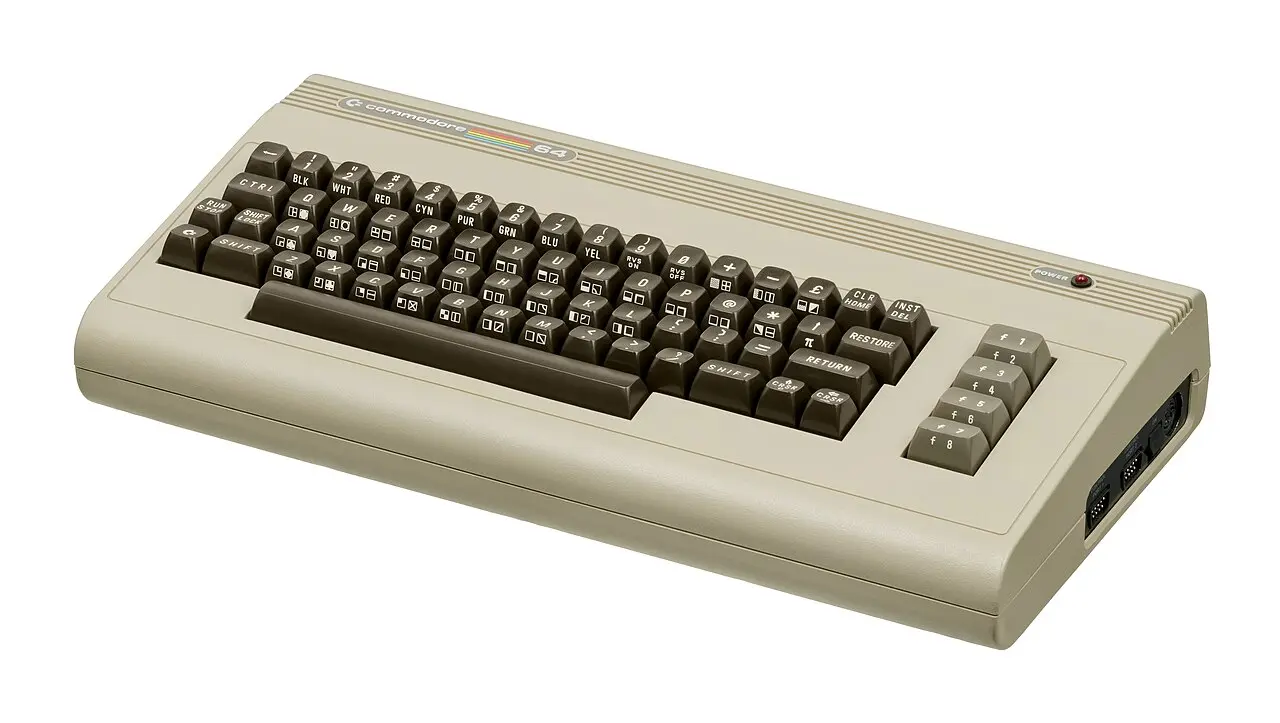
The salesperson had considerable influence. One shop specialised in Commodore, another in Atari or MSX. Some staff had outspoken favourites. Parents found the comparisons difficult to judge. A technically impressive machine might have little software, while a simpler model was more useful because everybody at school owned one.
06 / Reaching the public
Computers among radios and televisions
As home computers became popular, they appeared in television shops, department stores, toy shops and consumer-electronics chains.
This made sense: a home computer was often connected to an ordinary television and used a cassette recorder for storage. In the Netherlands, computer departments at Vroom & Dreesmann and shops such as Dixons played a part. Computers reached families who would never have entered a specialist electronics shop.
Presentation changed too. Major brands supplied displays, posters and colourful brochures. Their computers helped with homework, managed household accounts, taught children to program and still provided entertainment. The message was unmistakable: this was no longer equipment only for technicians.
07 / The brochures
At home, the comparisons began again
For those unable to afford a computer, brochures offered a cheap substitute. They were taken home, studied carefully and sometimes kept for years.
The cover usually showed the computer in its most attractive form: with a colour monitor, disk drive, printer and numerous accessories. The advertised starting price often bought only the basic machine. Recreating the complete arrangement in the picture cost considerably more.
Specifications were memorised. How many kilobytes of memory did it have? How many colours could it display? Was there a cartridge port? Families compared machines and added up prices. A disk drive could cost almost as much as the computer. Yet brochures made ownership imaginable. The machine was still in the shop, but on paper it was already sitting in your bedroom.
08 / Behind the counter
Software had to sell itself from the box
A computer without software was only half a product, so racks filled with cassettes, floppy disks and cartridges.
The packaging often promised more than the screen could deliver. Colourful artwork suggested entire worlds; screenshots were small and carefully selected. Expensive games might be kept in a cabinet or behind the counter. Customers read the box and had to decide. Trying software was not always possible, making magazine reviews and friends’ experiences important.
Copying was widespread. Even so, an original game retained its appeal. It came with a handsome box, manual, map or keyboard guide — tangible extras missing from a loose copy.
09 / Advice and repair
The salesperson as a source of answers
A new owner carried home a box full of unfamiliar sockets, cables and commands. If things went wrong, the customer returned to the shop.
Staff answered questions about poor television pictures, programs that refused to load and printers producing incomprehensible characters. Sometimes the computer was faulty. More often a cable was connected incorrectly, the cassette was in the wrong place or a command had been mistyped.
Good computer shops built loyal followings this way. Some organised demonstration evenings or courses. User groups and computer clubs also remained close to retailers. Before search engines, a knowledgeable shopkeeper could make the difference between a computer used intensively and one abandoned in a cupboard.
10 / Always something new
Saving for the next expansion
The shop remained tempting after the computer was bought. Something could always make the system faster, more useful or more complete.
A better joystick, disk drive, memory expansion, printer, monitor or modem: young users saved for weeks or months. They inspected the desired accessory in the window again and again, calculating how much pocket money was still missing.
High prices made every purchase worth considering. A joystick had to feel comfortable and survive rough use. Floppy disks cost enough to be numbered and reused. A printer was an investment that usually required convincing the entire family.
11 / A shop full of futures
Nobody yet knew exactly what the home computer would become
During the 1980s, computers became mass-market products. Large chains could buy more cheaply and attention gradually shifted towards the PC. Small shops had to compete through knowledge, repairs or unusual equipment.
- SEEThe demonstration
For many visitors, the shop was the first place where they could touch a computer themselves.
- CHOOSEThe ecosystem
A brand determined which software, peripherals and shared knowledge came within reach.
- LEARNThe source of answers
The retailer sold not just a box, but often explanation and confidence as well.
- DESIREThe brochure
Those unable to buy yet could still carry the future home on paper.
The computer shop sold something that did not yet have a fixed meaning. Was the machine a calculator, game console, teaching aid or typewriter? All those possibilities existed side by side. Even visitors who bought nothing often left with a brochure, price list, new idea or determination to keep saving. The computer might still stand behind glass, but the future was already on display.
12 / Sources & images
Read and explore further
- Eindhoven University of Technology — research into the domestication of the computer in the Netherlands, 1975–1990
- Heinz Nixdorf MuseumsForum — Computers for everyone, 1980–2000
- National Museum of American History — A Tool and Toy for the Home
Image credits
Cromemco MicroCentre showroom, Edinburgh, 1980 — Cromemco, CC BY-SA 4.0; resized and converted to WebP
ComputerLand advertisement, July 1977 — ComputerLand; scan by Michael Holley, public domain; resized and converted to WebP
Commodore 64 — Evan-Amos, public domain; previously resized and converted to WebP


