Culture & memory / Chapter 10
Why retro computers still evoke so much nostalgia
We do not merely miss the machines. We also miss the world in which we first discovered them.
01 / More than a device
One sound can restore an entire room
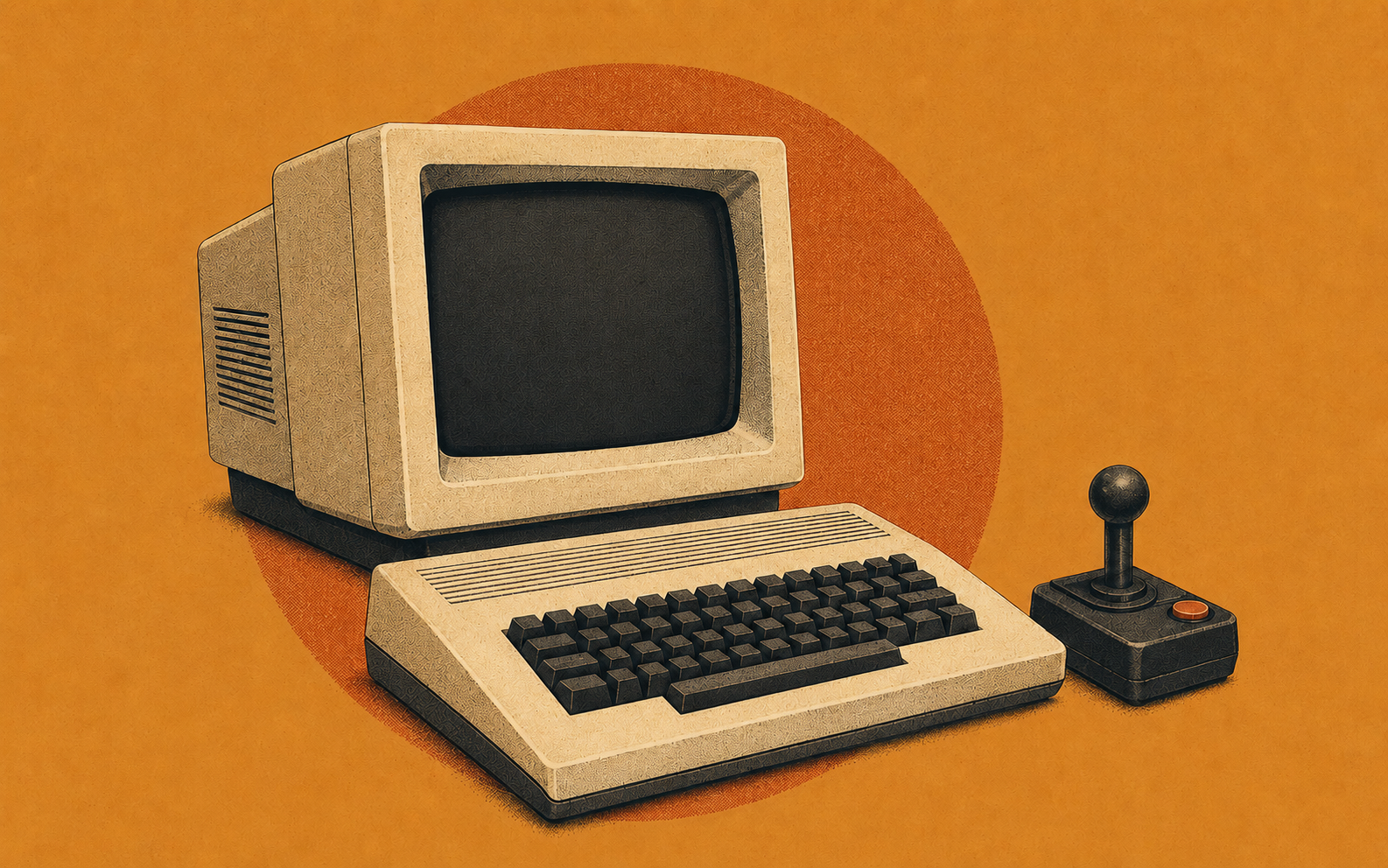
Seeing a Commodore 64, ZX Spectrum, MSX computer or Atari after many years often brings back much more than old technology.
The colour of the plastic, the shape of the keys and even the chatter of a disk drive can restore an entire room. Suddenly, there is the television to which the computer was connected, the notebook filled with handwritten BASIC lines or the friend who always seemed to have the newest games.
Retro computers are tied to personal memory. They belonged to the years in which many people first discovered what a computer could do. An old machine therefore rarely represents hardware alone. It also represents curiosity, free afternoons, family, friendship and the sense that an unknown digital world was waiting to be explored.
02 / The first computer
A home computer was an event
A machine might be anticipated for months, carefully unpacked and then investigated by the entire family.
Today, we replace a phone or laptop with little ceremony. Data and software move with us, and many devices resemble one another. During the 1980s, a home computer acquired a fixed place in the home. Some stood on a small desk, but many had to share the living-room television with everyone else. Playing or programming required negotiation.
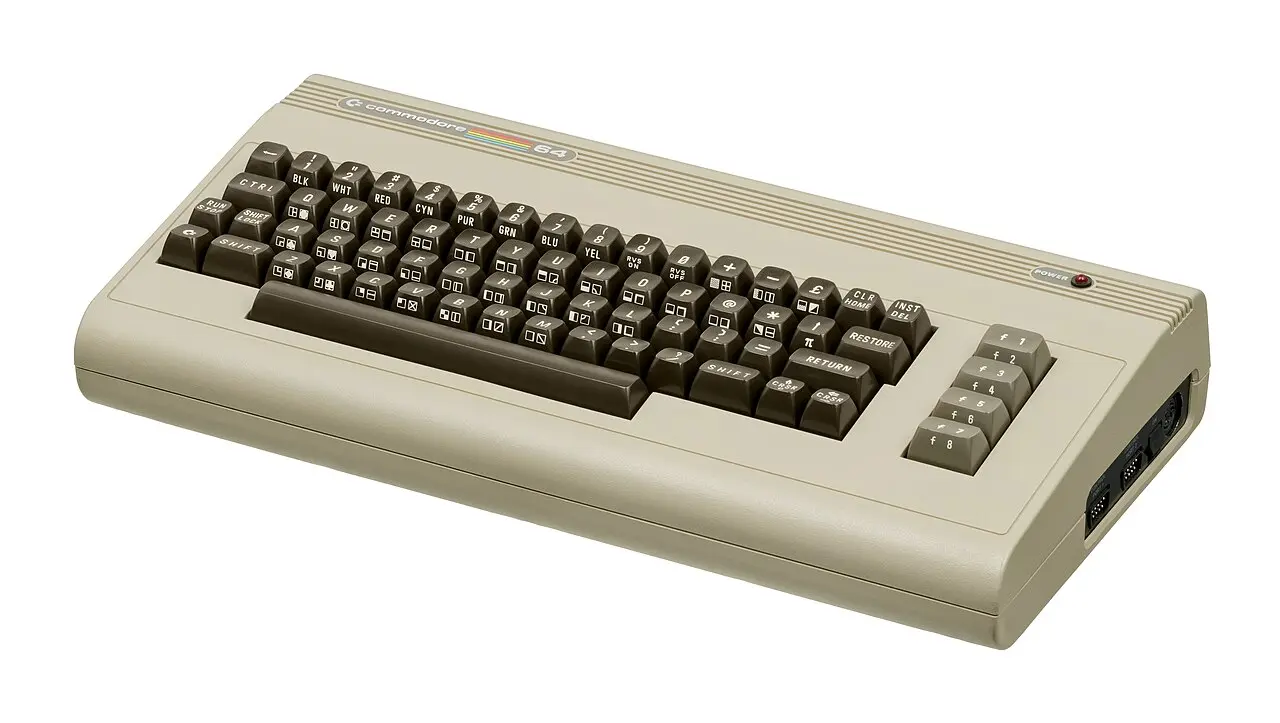
Switching it on did not reveal a collection of apps, but a blinking cursor and a BASIC prompt. That empty screen could feel severe, yet it also held a promise: type something and the machine will answer.
03 / Waiting
Loading was part of the ritual
The slowness of old computers was visible and audible.
A cassette turned. A counter advanced. A disk drive chattered, searched and clicked. Sometimes a colourful loading screen or a piece of music appeared. Sometimes ten minutes of waiting produced only an error and the process had to begin again.
It was not always enjoyable. Yet waiting made the experience tangible. Starting a game had a beginning, a build-up and — when everything worked — a small moment of release. A modern game may be technically far more impressive, but it often appears silently behind an icon. On an old computer, loading almost felt like an action performed together with the machine.
Disk drives, cassettes and game music gave each machine a recognisable voice.
An empty screen felt like an invitation to make something yourself.
Firm switches and worn rubber made using a computer a physical experience.
04 / Individual character
Every machine felt different
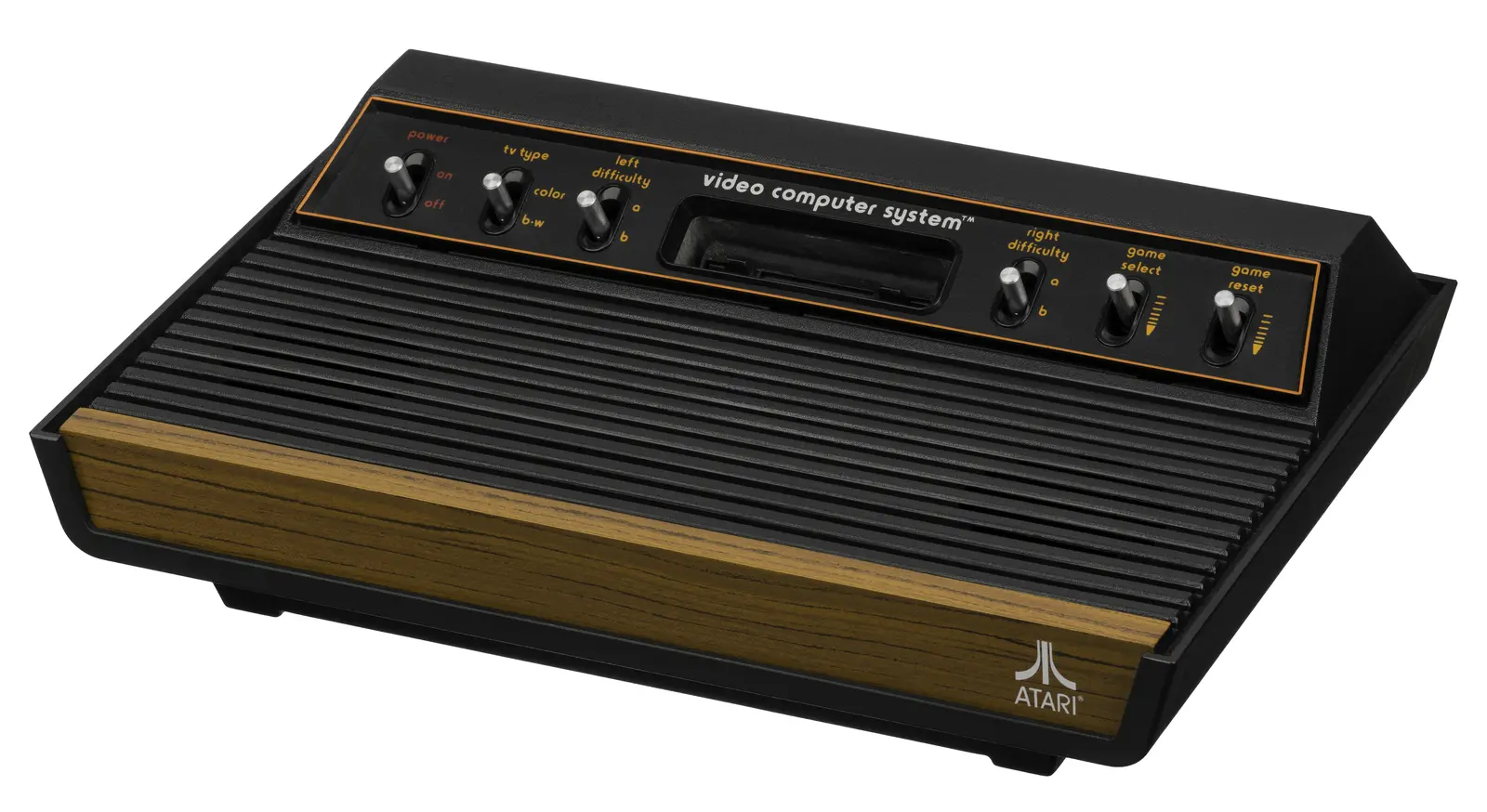
A Commodore 64 looked and sounded unlike a ZX Spectrum; MSX and Atari inhabited worlds of their own.
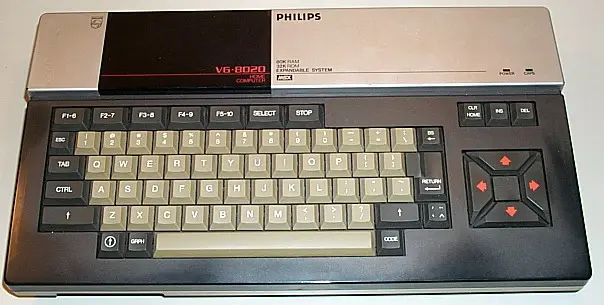
Video chips, sound chips, keyboards and storage media gave each computer recognisable qualities. Their limitations were equally visible. Colours collided, sprites flickered and music had only a handful of voices. Those restrictions produced distinctive styles. Programmers and musicians had to learn the personality of a machine and invent clever ways to work with it.
Users consequently developed strong loyalties to a brand or model. In schoolyards and computer clubs, Commodore, Atari, Sinclair and MSX were discussed almost like football teams. Specifications mattered, but pride and belonging mattered at least as much.
05 / Understanding it yourself
The distance between user and machine seemed smaller
A modern computer is vastly more powerful, but to most people it is also less transparent.
Many home computers started directly in BASIC. Manuals explained not just how to open a program, but how to create one. Magazines printed listings that readers could type in line by line. A typing mistake caused frustration, but a working program produced a powerful sense of ownership: this happened because you entered it.
Many future programmers began that way. Others learnt how to copy game cassettes, repair a joystick, install a memory expansion or work out with friends why something had failed. Not everyone became a technical expert. The machines nevertheless invited experimentation.
06 / Imagination
Limitations made the world larger
A few blocks had to represent a spaceship; several beeps became an explosion.
The player supplied much of what was missing. The box illustration, the story in the manual and the imagination of the player made the world larger than anything visible on screen. Those limited images were also easy to remember. A simple playfield, a striking sound or a character made from a few pixels could become fixed in memory.
Restrictions also made the work of the creators perceptible. You could almost sense someone searching for a solution within a few kilobytes. Smooth scrolling, an extra colour or unexpectedly rich music was not taken for granted. It was a small victory over the hardware.
07 / Together
There are people behind every memory
Games were loaned, traded and completed together.
Software came from friends, computer clubs, fairs and magazines. One person played while another watched. If something did not work, you phoned someone or took the disk to school the next day.
Even when sitting alone at the computer, you were not entirely separate from others. A copied cassette, a published listing or a handwritten label carried traces of the people through whose hands the software had passed. An old computer can therefore evoke people who have since faded from view: not only what did you play, but with whom, where and when?
08 / Formative years
Why memories of youth return so powerfully
An old computer can work like music from one’s youth: a few seconds restore an earlier version of oneself.
Research into autobiographical memory describes the reminiscence bump: adults recall a relatively large number of events from adolescence and early adulthood. People experience many things for the first time during these years, while their identity is taking shape. For those who discovered a home computer then, the machine naturally became intertwined with that formative period.
Nostalgia is not purely individual either. Photographs, videos, retro fairs and online communities confirm that other people recognise the same details. The blue screen of the Commodore 64 or the rubber keyboard of the ZX Spectrum becomes part of a shared past.
09 / Selective memory
The past was not actually better
We remember defeating a final opponent more readily than the game that crashed after a long loading time.
Nostalgia is selective. We recall the charm of a floppy disk, but less readily its corrupted files. Old joysticks broke, televisions flickered and manuals could be incomprehensible.
That does not make the feeling unreal. Nostalgia need not be a historical verdict. We can acknowledge that modern computers are more reliable, accessible and versatile, while still missing the directness of an old machine. The point is not that everything used to be better. It is that everything was still new.
10 / Not a frozen past
The cursor begins to blink again
Retro computers continue to live because people still do things with them. Nostalgia becomes not a display case, but an active form of computer culture.
- RESTOREOriginal machines
Collectors repair hardware and keep knowledge of old technology alive.
- CREATENew games
Programmers once again explore the limits of vintage chips and tiny memories.
- PRESERVEEmulation and archives
Software remains accessible even as the original hardware becomes rare.
- RELIVEA shared culture
Fairs, clubs and online groups give old memories a new continuation.
Ultimately, the greatest attraction is not found in processors or numbers of kilobytes. Retro computers remind us of a time when computers were new worlds that we had to open, understand and sometimes even build ourselves. As soon as the cursor begins to blink again, that world seems to start all over.
11 / Sources & images
Explore further
Image credits
- Opening illustration — original work for Silicon & Joysticks
- Commodore 64 — Evan-Amos, public domain
- Philips VG-8020 — SanderK, public domain
- Atari VCS / 2600 — Evan-Amos, public domain


