Failed promises / Part 5
Interactive television
Television would no longer be one-way. We would vote, shop, play along and decide for ourselves what appeared on screen.
01 / The promise
From viewer to user
The broadcaster transmitted and the audience watched. Interactive television would break open that old agreement.
The remote control would become a ballot box, shopping basket, games console and gateway to an endless video library. Viewers could play along with a quiz, open background material during the news, and begin a film when the household was ready rather than when a scheduler decided.
The promise returned in several forms. In the 1970s, a cable carried answers from the living room back to a control centre. In the 1990s, a powerful set-top box would connect television to the “information superhighway”. The red button arrived around 2000, followed by IPTV, smart TVs and apps.
Each time, the passive audience was said to be disappearing. The viewer became user, participant and consumer. Television would finally be able to listen.
02 / QUBE
The remote control that answered back
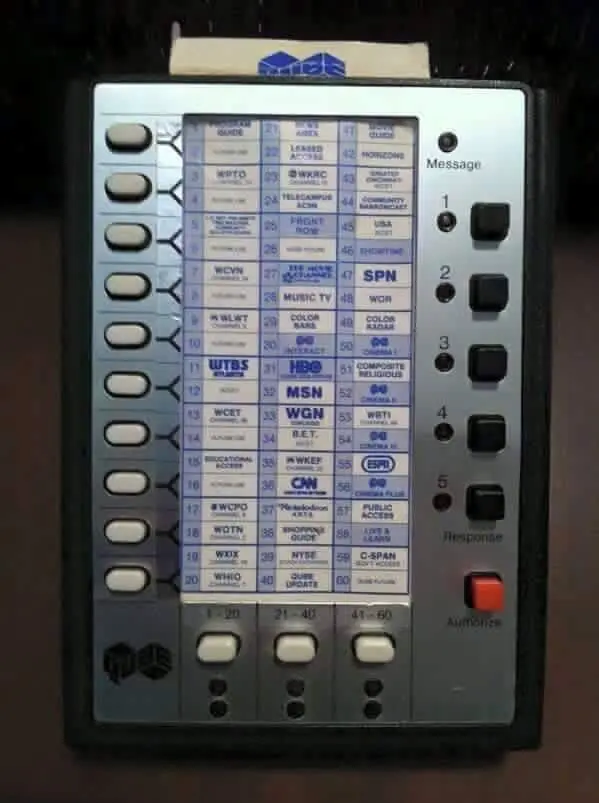
Warner Cable launched QUBE in Columbus, Ohio, on 1 December 1977.
The system offered thirty channels — an overwhelming number at the time — and a striking remote with eighteen buttons. Five black response buttons could send an answer back to the cable company. Viewers voted in polls, rated talent-show contestants and answered game-show questions. They could also order films and sporting events.
QUBE introduced ideas that later became ordinary: specialist cable channels, subscription television, pay-per-view and programming for precisely defined audiences. Its children’s programme Pinwheel even helped lay the foundations for Nickelodeon.
But QUBE was expensive. The return path required a modified cable network, special household equipment and a central computer. Interactive programmes had to be produced separately and the system had to process every button press. The service ended in 1984. The experiment was influential but unprofitable.
03 / The living room as studio
Taking part was less natural than watching
The most attractive demonstrations let viewers decide a talent contest, predict a match or express an opinion.
Yet this did not fundamentally change the television evening. Many people watched precisely because they did not have to do anything. After a working day, leaning back was a benefit, not a deficiency. A programme that constantly demanded choices could feel like work.
Good branching also required extra scripts, recordings and technology, much of which would never be seen. A live programme had to process the result quickly and reliably. If a choice had little effect, the interaction felt like a trick.
Television makers discovered an awkward truth: people sometimes wanted to participate, but not continually. The remote was used mainly to leave the offering, not to travel deeper into it.
04 / The information superhighway
In the 1990s, everything would arrive through the television
Media, cable, computer and telephone companies saw the set in almost every home as the destination for digital services.
Time Warner built the Full Service Network in Orlando. The first homes connected late in 1994. Trial users could select news and weather, start and rewind films, play games, shop and order food through on-screen icons. Even video calling belonged to the vision.
Behind the friendly icons stood an exceptionally expensive system of fibre, coaxial cable, video servers, switches and experimental set-top boxes. The trial’s real purpose was to discover what consumers might want once the equipment eventually became affordable.
The network closed in 1997. The technology had worked, but the economics had not. While the television industry constructed a controlled digital highway, the open internet was growing elsewhere.
05 / The box beneath the set
Every new future required another appliance
A set-top box decoded the signal, displayed menus, recorded choices and sent data back.
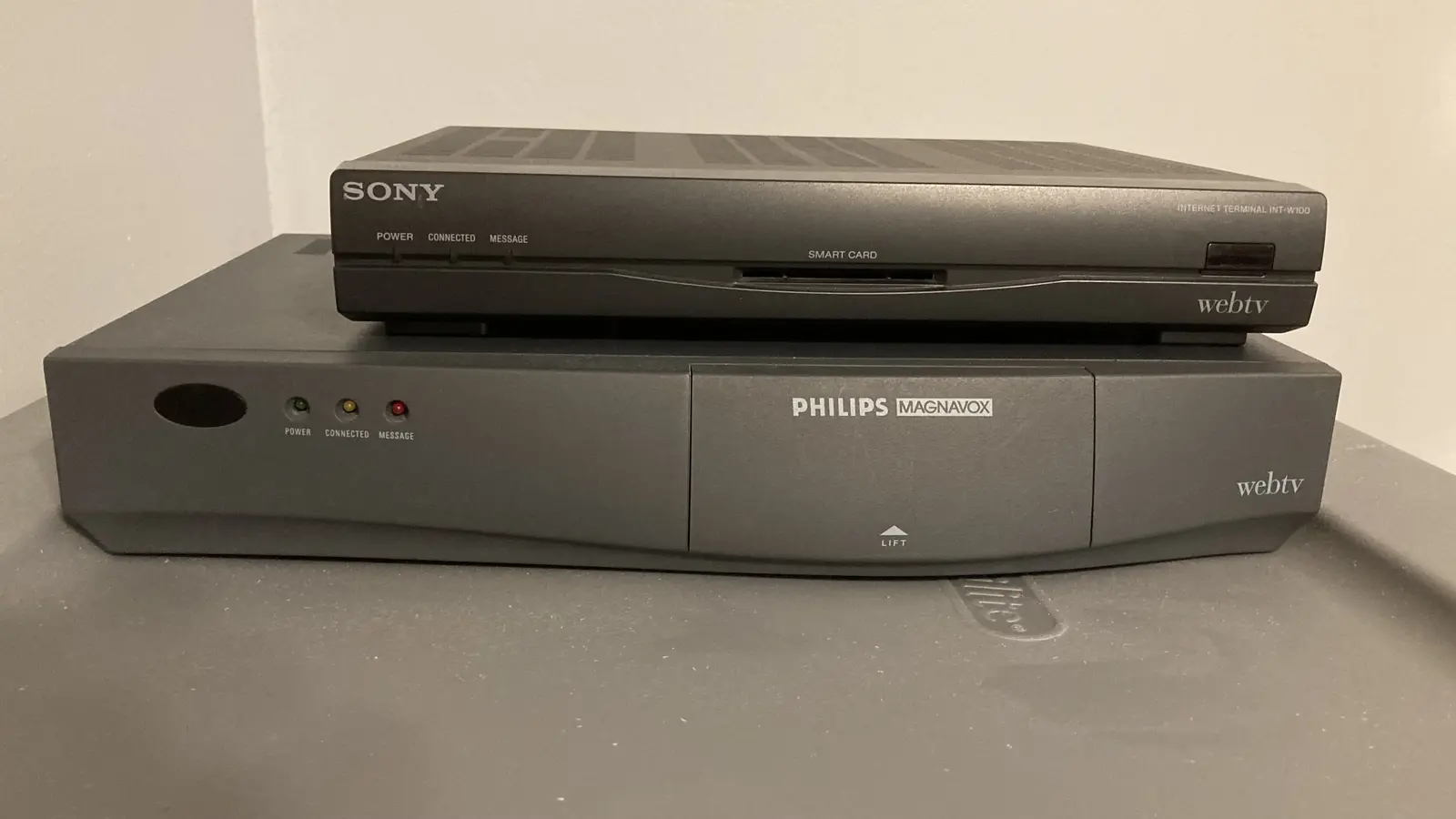
The television industry saw the box as a gateway for subscriptions, films, advertising and payments. For users it meant another remote, cable and menu. Services from different companies did not necessarily work on the same device.
Control also clashed with the medium. Small text, forms and long lists work badly on a screen watched from several metres away. Entering a name, address or search term with arrow keys was far more cumbersome than using a keyboard.
WebTV tried from 1996 to make internet and email available without a PC. Microsoft bought the company in 1997. The idea was understandable, but the web adapted poorly to low resolution, a slow telephone line and remote control. The set-top box wanted to be a computer without looking like one.
06 / Shopping from the sofa
Every viewer became a potential buyer
A dress from a drama, a CD from a music programme or pizza during a film: one button would turn interest into a purchase.
Advertisers loved the prospect. A commercial no longer had to hope that someone visited a shop later. The viewer could immediately request information or place an order. The screen became shop window and checkout at once.
In practice, trust was a problem. Who received the payment details? Had the order really been placed? Could a child buy something by accident? Comparing products, reading reviews and checking delivery options also fitted poorly into a television interface.
The web quickly offered a better shopping environment. Websites displayed many products, supported search and allowed keyboard entry. Television remained good at creating desire; the computer became the place to complete the transaction.
07 / Press red
A promising button became a digital side road
Digital television allowed broadcasters to send additional text, images, video streams and applications alongside a programme.
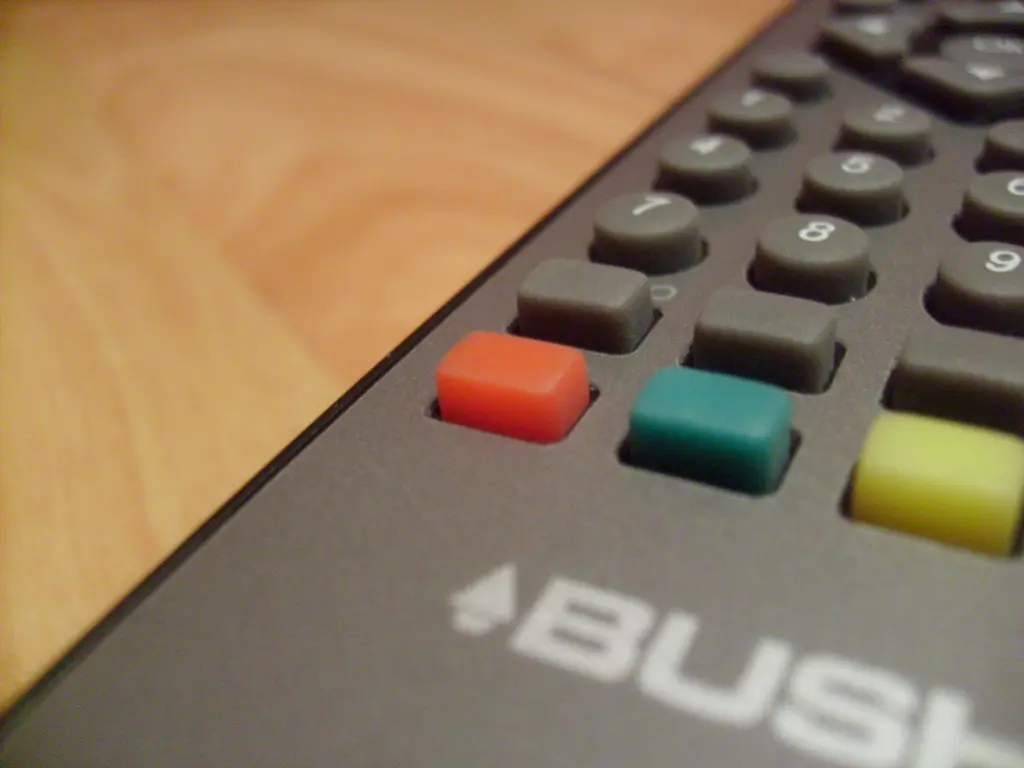
From 1999, the BBC developed BBC Text, later BBCi and BBC Red Button. Viewers received extra sports coverage, news, results and programme information. During major events it was useful: audiences could choose their own match or camera feed.
Broadcasters and distributors in the Netherlands experimented too. The NPO later used HbbTV — combining broadcast and internet — for additional video, NPO Plus and extra sports streams.
The button never became a universal entrance. Not every set or cable company supported the same functions. Loading could be slow, and viewers did not know what was waiting behind it. A phone or tablet delivered the same information more quickly and clearly.
08 / The Netherlands gets Mine
Interactive came to mean television on demand
KPN introduced its IPTV service Mine in 2006. In 2007, the product became simply Interactive TV.
Through an ADSL connection, customers could watch digital channels, order films and catch up with recently broadcast programmes. The meaning of interactive shifted. It became less about voting or shopping during a programme and more about controlling when to watch.
The electronic programme guide, video on demand, recording and catch-up proved more valuable than elaborate participation. This was a quieter revolution than the promises of the 1990s. Television did not become the household’s central shop, bank, telephone and computer. But it learned to wait.
This silent form of interaction succeeded. The viewer did not want to keep talking to the television; the viewer mainly wanted television to listen to one question: what do I want to watch now?
09 / The second screen wins
The smartphone did what the red button could not
Viewers looked up actors, reacted on social media and voted in an app while the programme continued.
The second screen had a keyboard, personal account and browser. It could show information without covering the television picture. Every viewer in the room could use a separate screen.
Programmes embraced hashtags, QR codes, apps and online voting. Television remained the shared stage; the phone became a personal remote to the outside world.
The cable company consequently lost its role as gatekeeper. Interaction no longer had to pass through the set-top box. Broadcasters could reach viewers directly, and viewers could talk to one another — sometimes much more loudly than they talked to the programme.
10 / Why it failed
Being able to choose is not the same as always wanting to choose
Several practical and social objections reinforced one another.
The infrastructure was too expensive. Two-way cable, video servers and set-top boxes demanded major investment before anyone knew what audiences wanted.
Standards were fragmented. An application for one network did not automatically work with another provider or television.
Control was awkward. A remote was suitable for selecting a channel, but not for forms, searches or detailed shopping.
Television was deliberately passive. The possibility of participating did not mean viewers wanted tasks and choices in every programme.
The internet moved faster. Computers and later smartphones were better at text, search, payment, communication and personal services.
11 / What survived
The best elements became invisibly ordinary
Interactive television failed as a separate, closed world. As a collection of features, it succeeded.
- PROMISEThe viewer in control
Television would listen, answer and connect the home to shops and games.
- BARRIERAn expensive closed world
Dedicated networks, boxes and interfaces made every service complicated.
- BREAKTHROUGHChoosing when to watch
Video on demand, pause and catch-up provided an immediately obvious benefit.
- LEGACYTelevision as an app
Streaming made the screen interactive; smartphones took over voting and search.
The great promise was that viewers would become participants. The most important change was simpler: viewers escaped the broadcast schedule. The remote did not become a ballot box, shopping basket and keyboard. It acquired one decisive power above all: choosing what begins now.
12 / Sources & images
Read and see more
- WOSU — QUBE brought the future of TV to Columbus in 1977
- IEEE Computer Society — The FSN challenge: large-scale interactive TV
- KPN — Our history
- NPO — More interactive television at NPO
Image credits
QUBE remote — Matt1861, CC BY-SA 4.0; converted to WebP
WebTV launch units — Halen Martini, CC BY-SA 4.0; resized and converted to WebP
Red button — HazySpy, public domain; converted to WebP


