Failed promises / Part 7
The smart home of the 1980s
Lights, curtains, heating, the coffee maker and security would work together automatically. The technology did work — provided the resident was willing to be programmer, installer and repair technician at once.
01 / The promise
The house as an invisible servant
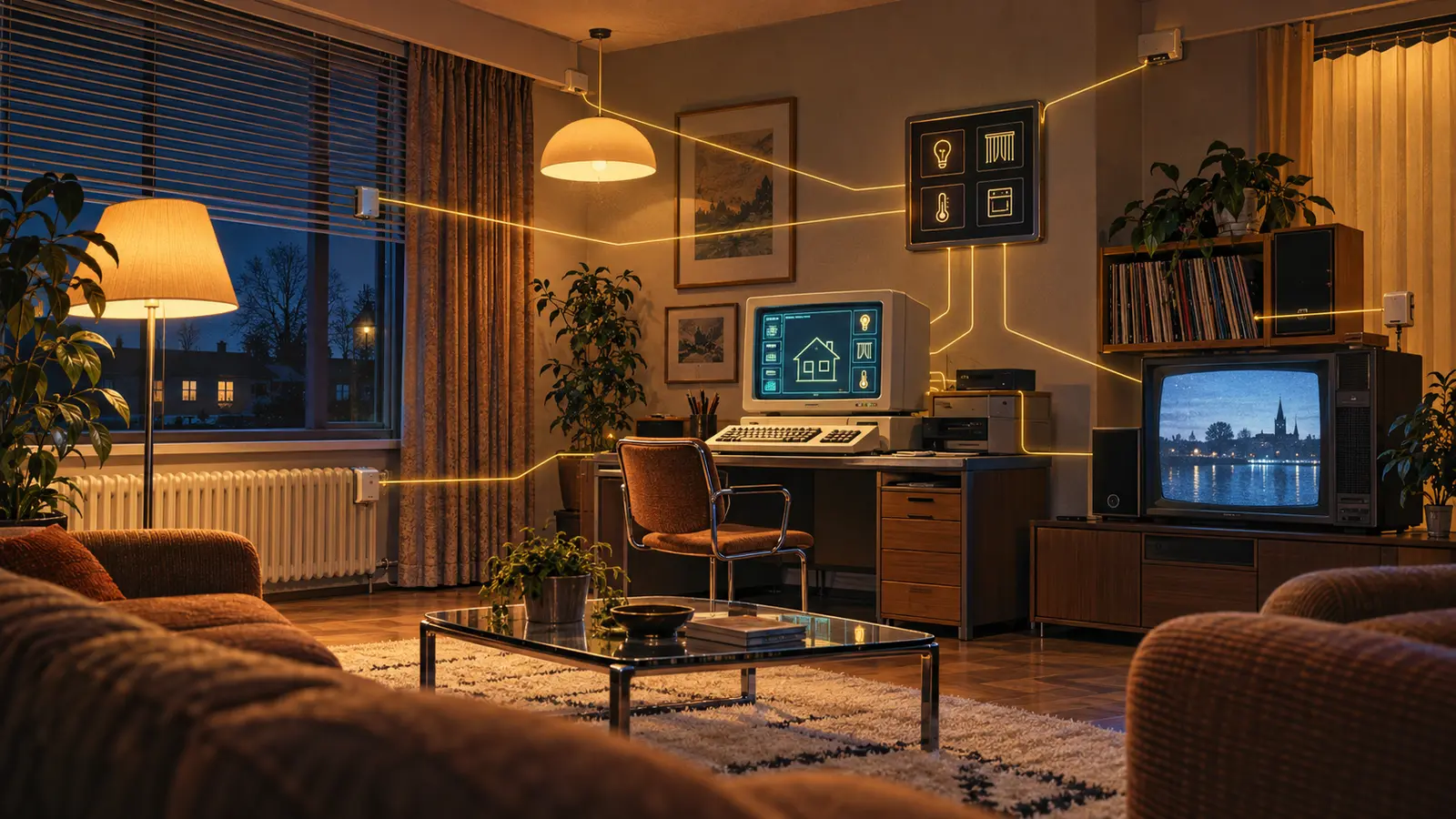
The home of the future would know when its residents returned, which room they occupied and how much heat it needed.
The curtains would close themselves, lighting would follow the evening and coffee would be ready before the alarm rang. During the 1980s this vision acquired a name: the smart home. Advertisements, demonstration houses and television programmes showed electronics organising everyday life.
The idea was bigger than a collection of remote controls. Heating, lighting, security, communication and entertainment would understand one another. Technology would disappear from sight and, for that very reason, be present everywhere.
The vision never vanished completely. Yet the smart home did not become the obvious new way to live. It could be taught many actions but understood nothing. The more jobs it received, the more complicated the house became.
02 / Messages through the mains
X10 turned every house into a data network
A smart home appeared to require kilometres of new cable. X10 used the electrical wiring already inside the walls.
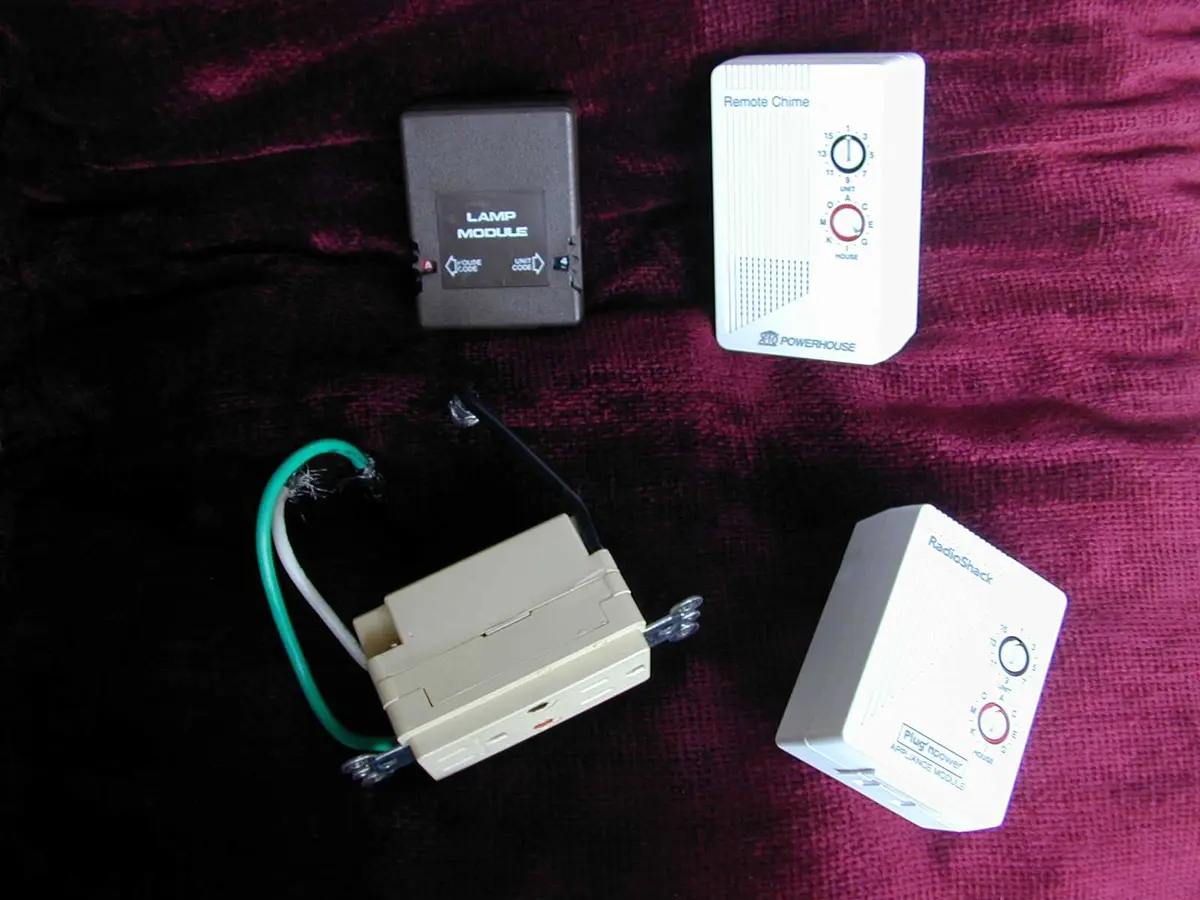
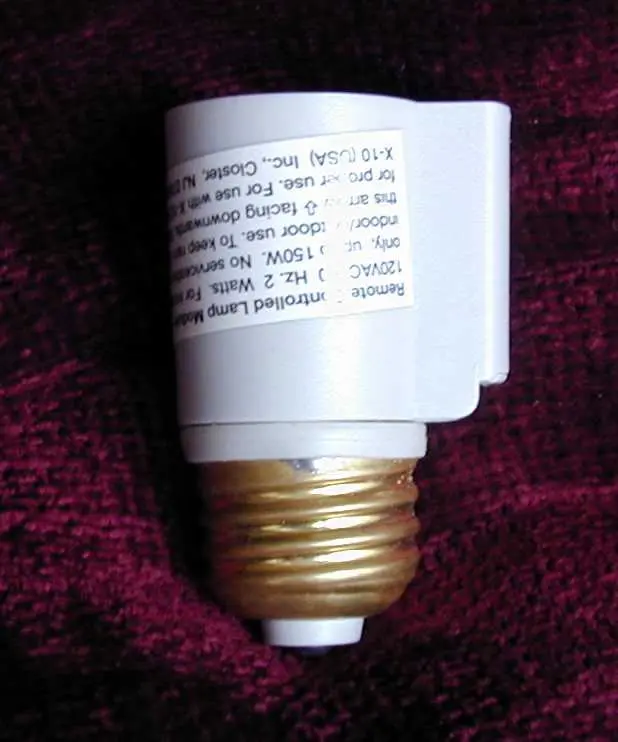
The technology was developed in 1975 by Scotland’s Pico Electronics. A transmitter placed short digital signals on the power line. Receiver modules recognised their own address and performed a command: on, off, brighter or dimmer.
The name did not refer to ten devices but to the developers’ tenth project. House codes and unit numbers determined which lamp or plug responded.
X10 products reached American shops near the end of the 1970s. In Europe, Busch-Jaeger introduced Busch-Timac X-10 in 1981. Without opening a wall, an ordinary house gained a primitive nervous system.
03 / The computer becomes caretaker
The Commodore 64 runs the evening
A computer interface turned X10 from remote control into automation.
Interfaces such as the X10 CP-290 stored commands and transmitted them at set times. Software for the Apple II, Commodore 64, Macintosh and DOS computers let residents create schedules. Heating rose at seven. Lamps came on around sunset. The living room dimmed later in the evening.
A computer could imitate occupancy during a holiday by switching lights at varying times. With enough modules, the same machine controlled a coffee maker, radio, fan or electric blanket.
Compared with a modern app, control was laborious: programs on floppy disk, text menus and carefully entered schedules. Even so, the effect was remarkable. A family computer bought for games and homework could suddenly operate the home’s infrastructure.
“Smart” did not mean that the house thought. It followed times, addresses and simple conditions. Most of its intelligence consisted of work the resident had already put into programming it.
04 / The future as a model home
A house had to be experienced
Demonstration homes turned switches and diagrams into a future visitors could walk through.
In 1980, the House of the Future designed by Taliesin Associated Architects opened in Ahwatukee, Arizona. Roughly 200,000 visitors came in two years to see electronics, energy conservation and futuristic design combined.
The Netherlands received its best-known example in 1989. The Huis van de Toekomst opened at the Autotron in Rosmalen. Science journalist Chriet Titulaer conceived and presented it; architect Cees Dam designed it.
The house reportedly combined around 250 applications. Screens, communication, security, domestic electronics and automatic facilities created a complete performance of twenty-first-century living.
Titulaer used the word domotica and presented technology not as a circuit board but as part of an ordinary day. Many individual predictions were accurate. The all-embracing house in which one system effortlessly united everything remained mainly a demonstration.
05 / The magic behind the wall
Every automatic action required preparation
A visitor saw a curtain close. A technician saw a motor, power supply, relay, sensor, cable, address and control logic.
Automation produced questions everywhere. Should a lamp react to time, movement, darkness or a central command? What happened when somebody switched it off by hand? Which setting took precedence?
Every module needed an address. Schedules were entered and wall switches matched with the right receivers. Then life changed: a different working day, a guest, a rearranged room. The perfect schedule became a series of small irritations.
The home of the future created a new form of invisible housework: naming devices, making rules, remembering exceptions and investigating faults. Not everyone wanted to become the system administrator of their own home after dinner.
06 / A command without a reply
When the lamp did not respond, nobody knew why
Mains wiring was everywhere, but it had not been designed for data communication.
Motors, dimmers and power supplies could create electrical noise. Signals did not always reach the other side of a home, particularly when circuits or phases were poorly linked.
Much early X10 equipment communicated in only one direction. The controller sent “A1 on” but received no confirmation that lamp A1 was actually lit. Its screen could suggest success while the room remained dark.
Enthusiasts installed signal boosters, filters and phase couplers, chose their modules carefully and learned which appliances caused interference. Each solution made the system more expensive and less effortless.
An automated lamp could fail because of the bulb, module, address, program, transmitter, mains noise or signal route. Smart functions added possibilities — and new ways for things not to work.
07 / No understanding of residents
A schedule is not intelligence
Daily routines are less regular than designers hope.
A resident returns early, unexpectedly stays away, sleeps late or opens a window while the heating is on. The systems of the 1980s had almost no context. A motion detector knew something moved, but not whether it was a resident, visitor or pet.
Automation reduced effort while the system was right. As soon as it was wrong, a resident had to override, disable or reprogram the rule.
The best control often remained the switch within reach. It required no manual, had no boot time and produced an immediately visible result.
08 / Islands of intelligence
One smart device could not speak to another
The promise assumed one house; the market delivered several systems.
A security installation, heating controller and audiovisual system could each be smart on its own without exchanging a word. X10 gained competitors and successors, including European professional building-control systems that eventually produced KNX.
Consumers faced uncertainty. Which standard would survive? Would components remain available in five years? Could the next computer still run the software?
A door, radiator or lighting circuit belongs to a house and should last for decades. A computer interface belongs to a product generation. Tying them together could make a technically modern house age faster than a traditional one.
09 / Why it failed
A complete system without a complete benefit
The equipment could do a great deal, but cost and complexity grew faster than daily convenience.
Installation was specialised. Modules, addresses, programming and sometimes electrical work remained necessary.
Reliability was inadequate. A missed command was tolerable for a mood lamp but not for security or heating.
Systems were poorly compatible. Devices from different manufacturers rarely formed one whole by themselves.
The household kept changing. Families, working hours and routines did not remain inside preset schedules.
The reward was often small. A complicated chain sometimes replaced no more than one press of a switch.
Technology aged faster than the house. Software and interfaces vanished while switches and radiators remained.
10 / Not a complete failure
The smart home broke into useful pieces
The grand vision lost ground, but applications with one clear purpose became ordinary.
The programmable thermostat reduced heating when nobody was home. Motion detectors proved useful for outdoor lighting and security. Timers, smoke detectors and automatic shading required little attention once properly set.
Home automation gained a more serious role in care and accessibility. Automatic doors, alarms, lights and remote controls can help people live independently for longer.
Broadband, Wi-Fi, smartphones and cheap sensors later lowered the installation threshold. Yet the old problems return: connections fail, cloud services close and brands do not always work together.
The modern smart home does not disprove the criticism of the 1980s. It is another attempt to solve the same tension: how much technology is justified by a small reduction in everyday effort?
11 / What survived
Not one brain, but many small routines
The smart home did not become an electronic butler. It became a collection of modest systems, each performing one task reasonably well.
- PROMISEThe house thinks ahead
One system controls lighting, climate, safety, communication and appliances.
- BREAKTHROUGHThe mains becomes a network
X10 brought automation over existing wiring within reach of households.
- BARRIERConvenience had to be programmed
Faults, settings and competing standards turned the resident into an administrator.
- LEGACYSmall features with a clear purpose
Thermostats, sensors and schedules survived without one central household brain.
The home of the future arrived piece by piece, inside the thermostat, doorbell, lamp and speaker. Every device became a little smarter. The resident still had to make sure they understood one another.
12 / Sources & images
Read and see more
- Frank Lloyd Wright Foundation — Ahwatukee House of the Future
- Cultural Heritage Agency of the Netherlands — Huis van de Toekomst
- Nederland Digitaal — The Netherlands’ first smart home
- Busch-Jaeger — Company history
- Wired — Home, Smart Home
Image credits
Hero illustration — generated for Silicon & Joysticks
X10 modules — Atlant, CC BY 2.5; resized and converted to WebP
X10 lamp module — Atlant, CC BY 2.5; resized and converted to WebP

